Saturday, 12 July 2014

Men of Yore: John Laird

This is another in a series of posts about men from history who have either achieved great things in one form or another by pushing boundaries: either in themselves or in society or science or exploration of some form. Boundary pushing and growth is what men do, it's their nature: to grow and push outwards. We, as men, are the frontiers men, the first to discover/uncover new territory, in a metaphysical sense (i.e. including both material and the immaterial) that is later colonised and 'civilised' by the rest of humanity.


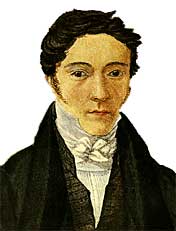
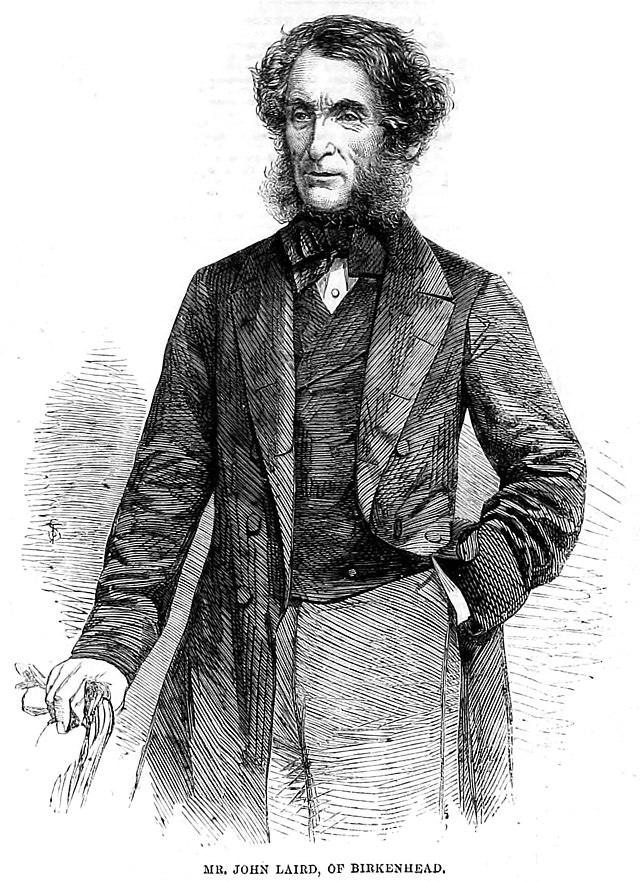
John Laird

John Laird (14 June 1805 – 29 October 1874) was a Scottish shipbuilder and key figure in the development of the town of Birkenhead. He was the elder brother of Macgregor Laird. He was one of the first to use iron in the construction of ships.


Origins
He was born in Greenock, Scotland, the eldest son of Scottish entrepreneur, William Laird and Agnes Macgregor. In the same year the Lairds moved to Liverpool. John Laird was educated at Liverpool Royal Institution. In 1824 the Laird family moved to Birkenhead, where William Laird and Daniel Horton established the Birkenhead Iron Works. This manufactured boilers near Wallasey Pool. This partnership was dissolved in 1828 and William Laird was joined in his business by John Laird, who had been a solicitor's articled clerk. The company was renamed William Laird & Son.


Shipbuilding
John Laird realised that the techniques of bending iron plates and riveting them together to build ships were similar to the principles involved in making boilers. Laird’s first vessel was a 60 ft pre-fabricated iron lighter, The Wye in 1829 - displacement sixty tons - which was used on canals and lakes in Ireland. This was followed by further orders for more lighters and in 1833 the paddle steamer Lady Lansdowne was built for the same firm. Many of the orders were for pre-fabricated river steamers. In 1834, he built the paddle steamer John Randolph for Savannah, Georgia, stated to be the first iron ship seen in America. For the East India Company, he built in 1839 the Nemesis, the first iron vessel carrying guns.

In 1839 Lairds built their first screw-propelled steamer, Robert F. Stockton, a 63 ft tug for use on North American waterways. By 1840, Lairds had built another 21 iron paddle-steamers including four gun boats for anti-piracy patrols for the British East India Company. Further orders for paddle frigates included the 1,400 ton HMS Birkenhead (which he designed) of 1848 which was famously wrecked off South Africa with the loss of over 400 soldiers in 1852. Perhaps their most famous vessel was the Confederate raider CSS Alabama. In 1857 the business moved to a new yard upstream from the Woodside Ferry, where it remained.

In 1844 John Laird started the construction of the Birkenhead Docks in the tidal Wallasey Pool. These were intended to compete with the Port of Liverpool but the venture was not a success and the system was merged with Liverpool docks in 1858.

In October 1863 John Laird and his shipbuilding company were caught making two naval ram vessels for the Confederate States Navy: El Toussoun and El Monastir. The names of these two ships do not appear to hold any significance in the confederacy which leads to the possibility that this was a covert contract between Laird and the Confederate navy. British marines raided these ships during construction forcing off the workmen and their equipment. The Royal Navy additionally deployed a gunship, HMS Heron, to the area to prevent the half constructed ships from leaving the port. Laird then sued the British government for impeding on his construction. As a Member of Parliament at the time, Laird was certainly aware of the intricacies of international relations between United Kingdom, the Northern and the Southern states during the American Civil War and his motivations for continuing work on this project are unknown.


Personal Life
In 1829 Laird married Elizabeth Hurry. In 1860, John Laird was joined in partnership by his three sons, William, John and Henry. However, John Laird retired in 1861 and the business was taken over by his sons. It merged with Charles Cammell & Co to form Cammell Laird in 1903.

He was the first mayor of Birkenhead and as chairman of the Birkenhead Improvement Commission, he played a key role in the development of the town. He was one of the first Commissioners in 1833, which were appointed to erect a market, to light and clean the streets and to maintain a police force. When Birkenhead became a Parliamentary Borough in 1861, John Laird retired from shipbuilding to become its first Member of Parliament for Birkenhead. He served from 1861 to 1874 as a Conservative. He was also Deputy Lieutenant of Cheshire and Justice of the Peace.

He contributed a great deal to the continuous improvement of the town as a benefactor. Laird was responsible for the building of the Dock Cottages. He made some generous donations for the erection of Saint James Church, the Borough Hospital and the Laird School of Art.[1]

He died at his home, 63 Hamilton Square, Birkenhead, following a riding accident. He is buried in the grounds of Birkenhead Priory, next to his yard.

An appeal for donations for a statue of John Laird quickly raised more than required from nearly 2,400 donors. The statue was sculpted by Albert Bruce-Joy. Over 2,000 people walked in procession for the statue's unveiling in 1877. It was unveiled by his friend, Lord Tollemache. The statue now stands in Hamilton Square in the centre of Birkenhead, though it was moved from its original position to make way for a cenotaph.

Source: http://en.wikipedia.org/wiki/John_Laird_(shipbuilder)

Iron-hulled ships may not be the most exciting invention to come out of of the 19th century, but it certainly improved the international transportation capacity of the entire world.  Which in turn has allowed the economy to grow as much as it has done.  The ultimate construction size of a wooden naval ship is limited because of the fragility of wood (click HERE for a brief explanation on the hypothetical maximum size of wooden ships).  Iron or steel ships are not limited by this ratio, and so ships can be built to larger sizes.  Much larger sizes in the case of oil tankers, and the incredible supertankers. (Regardless of the politics, economics, morality etc of oil dependency, the engineering of the oil industry is very impressive).

If we were still using wooden ships to haul goods over seas, then transport costs would be alot higher than they are, which in turn would increase costs for consumers and producers of goods, meaning that more efficient/productive machinery would not have been transported, which in turn would mean that the economy would not have been allowed to grow as much as it has done.  John Laird did a simple thing that allowed the development of the global economy: he noticed that boilers and ships were constructed along similar principles.


[End.]
Monday, 7 July 2014

Alternative Lyrics to Well Known Songs 26 - The Uncertainty Swamp

Confidence is something that every man needs.  Without it he is un-confident, anxious, un-certain.  Without it he seeks to gain confidence from others: other people, other beliefs, other things: which is not good (because it leads to deference to others in all aspects of life).  With confidence he can stand on his own two feet, stand around while the world is disintegrating around him and not be affected by it.  His confidence allows him to do his Will regardless of what the situation or other people think of him.  He can also provide confidence and certainty to others merely by being (his confidence is perceived by others, even in mundane situations like walking down the street).  They will take that feeling of confidence and then utilise it in many different areas of their life, thus causing a positive cascade effect on many other people and the culture itself.  The confident man will be able to stride forward into the world and shape it, impact on it, as much as he likes.  He will be able to do Good to the world simply because he has confidence.

Moving on to the song itself and the lyrics, the 'Uncertainty Swamp' mentioned is a metaphor for an ambivalent, indecisive, ambiguous, un-clear, ill-defined character (all traits of someone who lacks decisiveness & confidence, who are quite often women).  A swamp is both liquid and solid, has both water and earth.  It has trees and fish.  It is neither a lake nor a field.  It is both.  So it could be said to be indecisive inasmuch as it can't decide whether to be a solid field or a liquid lake.  It's both left-wing and right-wing, but also neither.  It's both a monarchist and a republican, but also neither.  It's both a deist, and an atheist, but also neither.  It is something and nothing.  It is of no defined character.  This absence of definition is what makes people un-certain, and un-confident.

Certainty provides confidence.  If you were going to cycle along a path you would need to know for certain that the road you were cycling along was going to remain a road and not change into a muddy quagmire, or even something so bizarre as a pool of toffee.  If that road was in-decisive and constantly changed it's mind about it's own nature then cyclists wouldn't have the confidence to go out for a simple bike ride because they wouldn't know whether the road was indeed going to remain a road or not.  Now extrapolate this simple scenario to different areas of human existence (manufacturing, inter-personal relationships, farming etc) and you begin to see how destructive a lack of confidence, of certainty, can be to human beings and their society.

A man can gain confidence in himself by choosing a particular path and sticking with it.  What that path is, what his character is (e.g. be him right-wing or left-wing, monarchist or republican, atheist or deist) is of secondary importance to him deciding to choose it.  The path itself is secondary to his decision to choose a particular path and stick with it, to pick a tree and live it, to pick a mountain and climb it regardless of the rocks and other violence that is inflicted upon him, to pick your cross.  Be confident with it, with your choice.  Confidence breeds decisiveness.  Decisiveness breeds confidence.


Play the song in the video above, and sing along with the alternative lyrics given below.


# The Uncertainty Swamp #
You heard the news lately,
about the Swampy Disease?
Yeah, it replaces your confidence.
with the Swamp mentality. 
Oh yeah.
 
It takes your Love.
and then replaces it with Swamp.
That murky Swamp.
The Uncertainty Swamp.
Yeah the swamp.
 
You know that fire within,
that let you do anything.
It get's extinguished by filthy thing,
that Disease known as Swamp. 
The Swamp.
 
It takes your Love.
and then replaces it with Swamp.
That murky Swamp.
The Uncertainty Swamp. 
The Swamp. 
The Swamp. 
The Swamp.
The Swamp.

It takes your Love.
and then replaces it with Swamp.
That murky Swamp.
The Uncertainty Swamp.
The Swamp.
 
I've been to the abyss.
I stood there and looked 'round.
It's terrifying & cold down there
but at least it has some form.
 
Any kind of form is better.
Form it gives you certainty.
Any kind of certainty
is better than no certainty.
 
Swamp takes your Love.
and then replaces it with Swamp.
That murky swamp.
The Uncertainty Swamp.
The Swamp.
The Swamp.
 
It takes your Love.
That murky Swamp.
It takes your Love.
That murky Swamp.
Too bad.
Too bad.
 
Hey hey hey.
Hey hey hey.
Hey hey hey.
Hey hey hey.
 
Hey hey hey.
Hey hey hey.
Hey hey hey.
Hey hey hey.
 
 
[End of lyrics.]

Saturday, 5 July 2014

Men of Yore: Tycho Brahe

This is another in a series of posts about men from history who have either achieved great things in one form or another by pushing boundaries: either in themselves or in society or science or exploration of some form. Boundary pushing and growth is what men do, it's their nature: to grow and push outwards. We, as men, are the frontiers men, the first to discover/uncover new territory, in a metaphysical sense (i.e. including both material and the immaterial) that is later colonised and 'civilised' by the rest of humanity. 

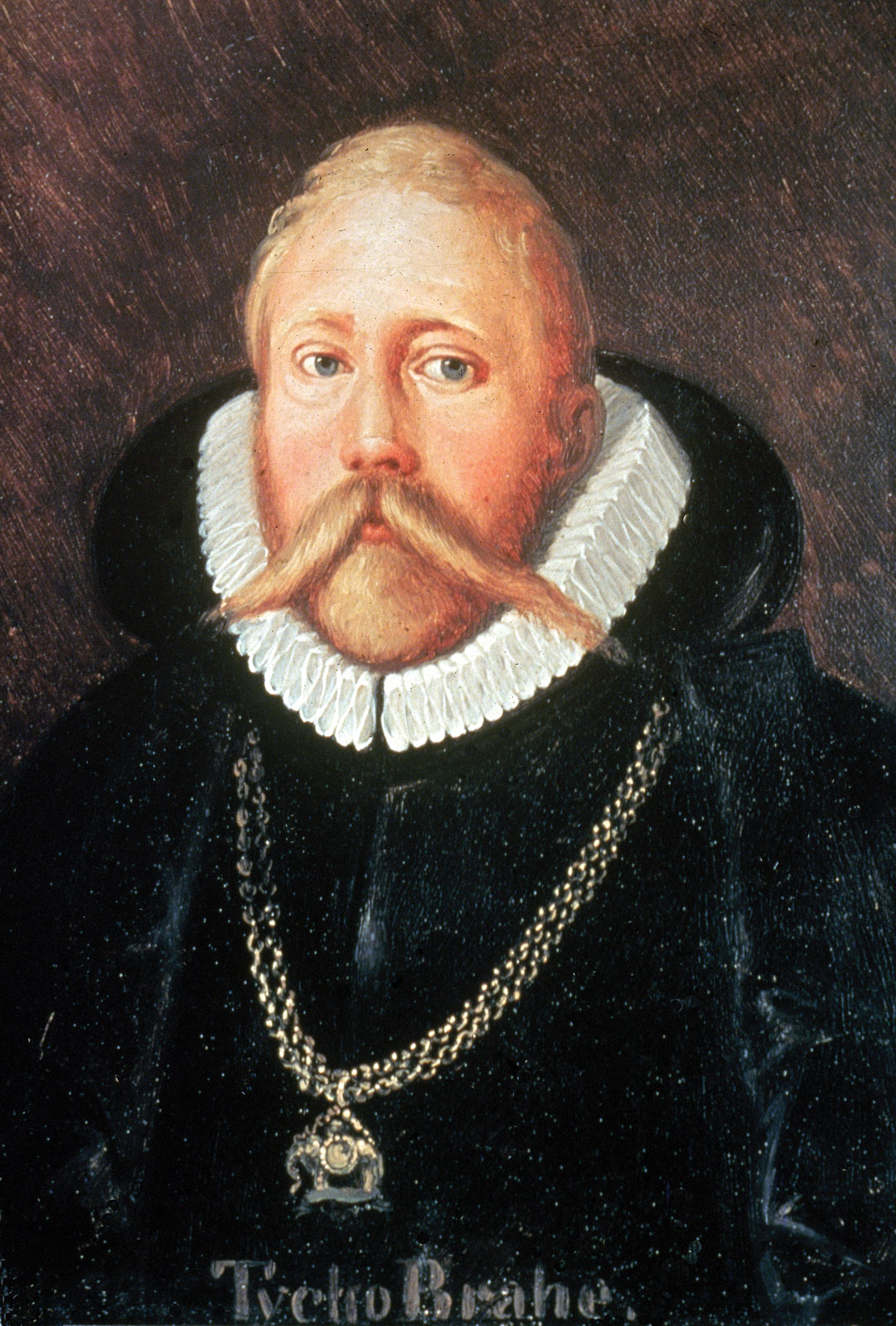
Tycho Brahe


Tyge (Latinized as Tycho) Brahe was born on 14 December 1546 in Skane, then in Denmark, now in Sweden. He was the eldest son of Otto Brahe and Beatte Bille, both from families in the high nobility of Denmark. He was brought up by his paternal uncle Jrgen Brahe and became his heir. He attended the universities of Copenhagen and Leipzig, and then traveled through the German region, studying further at the universities of Wittenberg, Rostock, and Basel. During this period his interest in alchemy and astronomy was aroused, and he bought several astronomical instruments. In a duel with another student, in Wittenberg in 1566, Tycho lost part of his nose. For the rest of his life he wore a metal insert over the missing part. He returned to Denmark in 1570.
In 1572 Tycho observed the new star in Cassiopeia and published a brief tract about it the following year. In 1574 he gave a course of lectures on astronomy at the University of Copenhagen. He was now convinced that the improvement of astronomy hinged on accurate observations. After another tour of Germany, where he visited astronomers, Tycho accepted an offer from the King Frederick II to fund an observatory. He was given the little island of Hven in the Sont near Copenhagen, and there he built his observatory, Uraniburg, which became the finest observatory in Europe.
Tycho designed and built new instruments, calibrated them, and instituted nightly observations. He also ran his own printing press. The observatory was visited by many scholars, and Tycho trained a generation of young astronomers there in the art of observing. After a falling out with King Christian IV, Tycho packed up his instruments and books in 1597 and left Denmark. After traveling several years, he settled in Prague in 1599 as the Imperial Mathematician at the court of Emperor Rudolph II. He died there in 1601. His instruments were stored and eventually lost.
Tycho's major works include De Nova et Nullius Aevi Memoria Prius Visa Stella ("On the New and Never Previously Seen Star) (Copenhagen, 1573); De Mundi Aetherei Recentioribus Phaenomenis ("Concerning the New Phenomena in the Ethereal World) (Uraniburg, 1588); Astronomiae Instauratae Mechanica ("Instruments for the Restored Astronomy") (Wandsbeck, 1598; English tr. Copenhagen, 1946); Astronomiae Instauratae Progymnasmata ("Introductory Exercises Toward a Restored Astronomy") (Prague 1602). His observations were not published during his lifetime. Johannes Kepler used them but they remained the property of his heirs. Several copies in manuscript circulated in Europe for many years, and a very faulty version was printed in 1666. At Prague, Tycho hired Johannes Kepler as an assistant to calculate planetary orbits from his observations. Kepler published the Tabulae Rudolphina in 1627. Because of Tycho's accurate observations and Kepler's elliptical astronomy, these tables were much more accurate than any previous tables.
Tycho Brahe's contributions to astronomy were enormous. He not only designed and built instruments, he also calibrated them and checked their accuracy periodically. He thus revolutionized astronomical instrumentation. He also changed observational practice profoundly. Whereas earlier astronomers had been content to observe the positions of planets and the Moon at certain important points of their orbits (e.g., opposition, quadrature, station), Tycho and his cast of assistants observed these bodies throughout their orbits. As a result, a number of orbital anomalies never before noticed were made explicit by Tycho. Without these complete series of observations of unprecedented accuracy, Kepler could not have discovered that planets move in elliptical orbits. Tycho was also the first astronomer to make corrections for atmospheric refraction. In general, whereas previous astronomers made observations accurate to perhaps 15 arc minutes, those of Tycho were accurate to perhaps 2 arc minutes, and it has been shown that his best observations were accurate to about half an arc minute.
Tycho's observations of the new star of 1572 and comet of 1577, and his publications on these phenomena, were instrumental in establishing the fact that these bodies were above the Moon and that therefore the heavens were not immutable as Aristotle had argued and philosophers still believed. The heavens were changeable and therefore the Aristotelian division between the heavenly and earthly regions came under attack (see, for instance, Galileo's Dialogue) and was eventually dropped. Further, if comets were in the heavens, they moved through the heavens. Up to now it had been believed that planets were carried on material spheres (spherical shells) that fit tightly around each other. Tycho's observations showed that this arrangement was impossible because comets moved through these spheres. Celestial spheres faded out of existence between 1575 and 1625.
If Tycho destroyed the dichotomy between the corrupt and ever changing sublunary world and the perfect and immutable heavens, then the new universe was clearly more hospitable for the heliocentric planetary arrangement proposed by Nicholas Copernicus in 1543. Was Tycho therefore a follower of Copernicus? He was not. Tycho gave various reasons for not accepting the heliocentric theory, but it appears that he could not abandon Aristotelian physics which is predicated on an absolute notion of place. Heavy bodies fall to their natural place, the Earth, which is the center of the universe. If the Earth were not the center of the universe, physics, as it was then known, was utterly undermined. On the other hand, the Copernican system had a number of advantages, some technical (such as a better lunar theory and smaller epicycles), and others more based on harmony (an obvious explanation of retrograde planetary motion, a strict demonstration of the order and heliocentric distances of the planets). Tycho developed a system that combined the best of both worlds. He kept the Earth in the center of the universe, so that he could retain Aristotelian physics (the only physics available). The Moon and Sun revolved about the Earth, and the shell of the fixed stars was centered on the Earth. But Mercury, Venus, Mars, Jupiter, and Saturn revolved about the Sun. He put the (circular) path of the comet of 1577 between Venus and Mars. This Tychonic world system became popular early in the seventeenth century among those who felt forced to reject the Ptolemaic arrangement of the planets (in which the Earth was the center of all motions) but who, for various reasons, could not accept the Copernican alternative.

Before a farmer can plant a field he must first become aware of it and observe it.  Before man can go into space and colonise it he must first become aware of it and observe it.  Before a man can manipulate or modify anything in the world he must first become aware of it.  While creation ex-nihlo might be blind on ocassion (i.e "I can't see what I am about to create until it is actually created."), on other times creation requires an observation period before hand.  Tycho Brahe observed space, stars and the planets.  Without Tycho Brahe his observations and contraptions (he was a practical man aswell as a theoretical one) it would have been impossible for the modern twentieth and twenty-first century man to do all of the amazing things that he has done; blasting rockets into near Earth orbit, putting satellites there to observe both our own home-world and other worlds and stars in the universe.

And remember that all of Tycho's discoveries came from his own love of astronomy.  Learning is a personal thing based on love (i.e. easy-flowing, stress-free, enjoyment) not compulsion.  Enjoy it, whatever it is that you do.


[End.]

Friday, 27 June 2014

Men of Yore: Louis-Nicholas Robert

This is another in a series of posts about men from history who have either achieved great things in one form or another by pushing boundaries: either in themselves or in society or science or exploration of some form. Boundary pushing and growth is what men do, it's their nature: to grow and push outwards. We, as men, are the frontiers men, the first to discover/uncover new territory, in a metaphysical sense (i.e. including both material and the immaterial) that is later colonised and 'civilised' by the rest of humanity. 


Louis-Nicholas Robert


Early and Family Life
Louis-Nicolas Robert was born to aging parents on rue Neuve-Saint-Eustache, 1st arrondissement of Paris. As a child he was physically frail and self-conscious, but studious and ambitious. He received an excellent education with a strong focus on science and mathematics at the hands of the religious order of the Minimes.[7] He felt guilty for being a financial burden to his parents.[1] At the age of 15, he tried to enlist in the army in order to support the American Revolution, but was rejected. He was accepted into the military four years later.[1]

On 23 April 1780 he joined the First Battalion of the Grenoble Artillery, and was subsequently stationed in Calais. In 1781 he transferred to the Metz Artillery regiment and was sent to Saint-Domingue, where he fought the English. He served in the military for 14 years (circa 1794), and rose to the rank of Sergeant Major.[6] Another account of Robert's military career suggests that he left the army aged 28, in 1790.[1]

Robert married Charlotte Routier on 11 November 1794, in a civil ceremony.[6] The ceremony was civil because of the post-Revolutionary decree that marriage be a simple civil contract, certified by a municipal officer.

Paper Manufacture Machine
In 1790, having finished with his military career, Robert became an indentured clerk at one of the Didot family's renowned Paris publishing houses. First working under Saint-Léger Didot as a clerk, he later switched to a position as "inspector of personnel" at Pierre-François Didot's paper-making factory in Corbeil-Essonnes[5]. This well-respected establishment had a history dating back to 1355 and supplied paper to the Ministry of Finance for currency manufacture.[6][1] Both Robert and Didot grew impatient with the quarrelling workers, vatmen, couchers, and laymen, so Robert was spurred to look for a mechanical solution to the manual labour of the paper-making process.[1]

In his book Papermaking: the History and Technique of an Ancient Craft, Dard Hunter reported that:
[Louis-Nicolas Robert] declared that it was the constant strife and quarrelling among the workers of the handmade papermakers' guild that drove him to the creation of the machine that would replace hand labour.[1]

Although Didot judged Robert's first plans to be "feeble", they showed enough promise to continue research, and Didot financed a small prototype model. This was completed by 1797, but it was also deemed a failure. Robert became discouraged, so Didot appointed him "superintendant of grain grinding" at a nearby flour mill. After a few months' rest from the paper factory, Didot encouraged Robert to reprise the paper machine, and put several mechanics at his disposal. The next model showed some improvement, and Didot therefore instructed Robert to make a full-size model, scaling-up to the popular 24 inch 'Colombier' width.[5] This machine was a success and produced two sheets of "well felted" paper.[1]

Patent Application
Following Robert's successful model, built in 1798, Saint-Léger Didot insisted that Robert apply for a patent. Prior to 1798, paper was made one sheet at a time, by dipping a rectangular frame or mould with a screen bottom into a vat of pulp. The frame was removed from the vat, and the water was pressed out of the pulp. The remaining pulp was allowed to dry; the frame could not be re-used until the previous sheet of paper was removed from it. Robert's construction had a moving screen belt that would receive a continuous flow of stock and deliver an unbroken sheet of wet paper to a pair of squeeze rolls.[4] As the continuous strip of wet paper came off the machine it was manually hung over a series of cables or bars to dry. With Didot's urging, Robert and Didot went to François de Neufchâteau, the Minister of the Interior and applied for a patent. In 1799, the patent (brevet d'invention) was granted by the French Government, for which Robert paid 8,000 francs.[5][2][4]
The patent specification and application for the continuous paper-making machine is published in the second volume of the Brevets d'Inventions Expirés.[5]
On 9 September 1798 (23 Fructidor Year VI[6]) Robert wrote a letter applying for a patent[1]:
For several years I have been employed in one of the principal mills of France. It has been my dream to simplify the operation of making paper by forming it with infinitely less expense, and, above all, in making sheets of extraordinary length without the help of any worker, using only mechanical means.Through diligent work, by experience, and with considerable expense, I have been successful and a machine has been made that fulfils my expectancy. The machine makes for economy of time and expense and extraordinary paper, being 12 to 15 metres in length, if one wishes.
In a few words I have set forth the advantages of my machine, which I have built at the home of Citizen Didot, manufacturer at Essonnes. It is here the place to say that in Citizen Didot I have found great help in the making of this machine. His workshop, his workers, even his purse, have been at my disposition; he shares generosity and confidence that one finds only in real friends of the arts.
I solicit you, Citizen Minister, for the patent of my invention, which ought to assure me my property, and work for myself. My fortune does not permit me to pay the tax of this patent at once, which I desire to have for fifteen years, nor do my means permit me the cost of a model. This is why, Citizen Minister, I implore you to name a number of commissioners to examine my work, and in view of the immense usefulness of my discovery grant me a patent gratuitously. Robert[1]

De Neufchâteau authorised the Bureau of Arts and Trades (Bureau des Arts et Métiers) to send a draughtsman, Monsieur Beauvelot, to Essonnes to document and build an improved model. The minister also authorised a member of the Conservatoire National des Arts et Métiers to accompany him.[1] The Bureau des Arts et Métiers then declared:
Citizen Robert is the first to imagine a machine capable of making paper from the vat; this machine forms paper of great width and of indefinite length. The machine makes paper of perfect quality in thickness and gives advantages that cannot be derived from ordinary methods of forming paper by hand, where each sheet is limited in size in comparison with those made on this machine. From all reports it is an entirely new invention and deserves every encouragement.[1]
The Conservatoire des Arts et Métiers paid Robert three thousand francs to build another model for permanent display at the Musée des Arts et Métiers.[1]

In 1785, Christophe-Philippe Oberkampf invented the first machine for printing dyes on squares of wallpaper. The significance of Robert's invention was for more than mechanising a labour-intensive process, in also allowing continuous lengths of patterned and coloured paper to be produced for hanging. This offered the prospect of novel designs and nice tints to be printed and displayed in drawing rooms across Europe.[4]

Development in England
Robert and Didot quarrelled over the ownership of the invention.[5] Robert eventually sold both the patent and the prototype machine to Didot for 25,000 francs. Didot defaulted on the payments to Robert, however, and he was forced to recover legal ownership of the patent on 23 June 1801.[5] Didot wanted to develop and patent the machine in England, away from the distractions of the French Revolution, so he sent his English brother-in-law, John Gamble, to London.

In March 1801, after demonstrating continuous rolls of paper from Essonne, John Gamble agreed to share the London patent application with brothers Sealy and Henry Fourdrinier, who ran a leading stationery house.[5] Gamble was granted British patent 2487 on 20 October 1801 for an improved version of Robert's original machine. Thus the next development was financed by the London stationers. Gamble and Didot shipped the machine to London, and after 6 years and approximately £60,000 of development costs, the Fourdriniers were awarded new patents.[8] An example of the Fourdrinier machine was installed at Frogmore, Hertfordshire.[9]

Death and Commemoration
In 1812, in poor health, having both sold and lost control of his invention and the patent, with further exploitation being concentrated in England, Robert retired from paper-making and left Corbeil-Essonnes. He moved to Vernouillet, Eure-et-Loir and opened a small school, Faubourg St Thibault. The French economy was very depressed after Napoleon's defeats, and Robert was very poorly paid. He continued teaching until his death on 8 August 1828.[6][1] A statue of him stands in front of the church in Vernouillet, and the "Collège de Louis-Nicolas Robert" in the quartier des Grandes Vauvettes is named in his honour.[6]

In 1976, Leonard Schlosser discovered Robert's original drawings at auction and made facsimiles for scholars and friends.[10] It is not now known where the original drawings can be seen.

Source: http://en.wikipedia.org/wiki/Louis-Nicolas_Robert

A piece of paper doesn’t look impressive.  It looks bland, unexciting.  A grand nothingness that does nothing and acts nothing.  Just sitting there doing nothing.  It is nothing special.  It doesn’t win awards for artistic contributions to society or civilisation.  It doesn’t give anything away.  It just is.  Yet it is so in-valuable that we could not be with out it; it’s quite as simple as that.  Civilisation is dependent on paper, a medium for the express communication of thoughts and ideas to other human beings.  We need it.  We need it’s blandness, it’s receptivity, it’s un-arousing nature, it’s complete lack of excitement, because we need to be able to imprint our creative mind on top of and into it, thereby giving rise to the great works of humanity - great works of art, great works of literature, great works of investigation (the critical disciplines), and so on - great works all around which are utterly dependent on its nothingness, on its passivity and its willingness to receive whatever we imprint upon it.  We need it.  We need paper.


[End.]

Saturday, 21 June 2014

Men of Yore: Alan Turing

This is another in a series of posts about men from history who have either achieved great things in one form or another by pushing boundaries: either in themselves or in society or science or exploration of some form. Boundary pushing and growth is what men do, it's their nature: to grow and push outwards. We, as men, are the frontiers men, the first to discover/uncover new territory, in a metaphysical sense (i.e. including both material and the immaterial) that is later colonised and 'civilised' by the rest of humanity. 

Alan Turing
 

Alan Mathison Turing was born on 23 June 1912, the second and last child (after his brother John) of Julius Mathison and Ethel Sara Turing. The unusual name of Turing placed him in a distinctive family tree of English gentry, far from rich but determinedly upper-middle-class in the peculiar sense of the English class system.
[..]
Until his father's retirement from India in 1926, Alan Turing and his elder brother John were fostered in various English homes where nothing encouraged expression, originality, or discovery. Science for him was an extra-curricular passion, first shown in primitive chemistry experiments. But he was given, and read, later commenting on its seminal influence, a popular book called Natural Wonders Every Child Should Know.
His boyhood scientific interests were a trial to his mother whose perpetual terror was that he would not be acceptable to the English Public School. At twelve he expressed his conscious fascination with using 'the thing that is commonest in nature and with the least waste of energy,' presentiment of a life seeking freshly minted answers to fundamental questions. Despite this, he was successfully entered for Sherborne School. The headmaster soon reported: "If he is to be solely a Scientific Specialist, he is wasting his time at a Public School." The assessment of his establishment was almost correct. 
Turing's private notes on the theory of relativity showed a degree-level appreciation, yet he was almost prevented from taking the School Certificate lest he shame the school with failure. But it appears that the stimulus for effective communication and competition came only from contact with another very able youth, a year ahead of him at Sherborne, to whom Alan Turing found himself powerfully attracted in 1928. He, Christopher Morcom, gave Turing a vital period of intellectual companionship — which ended with Morcom's sudden death in February 1930. 

Turing's conviction that he must now do what Morcom could not, apparently sustained him through a long crisis. For three years at least, as we know from his letters to Morcom's mother, his thoughts turned to the question of how the human mind, and Christopher's mind in particular, was embodied in matter; and whether accordingly it could be released from matter by death.
This question led him deeper into the area of twentieth century physics, first helped by A. S. Eddington's book The Nature of the Physical World, wondering whether quantum-mechanical theory affected the traditional problem of mind and matter.
Source: http://www.turing.org.uk/bio/part1.html 

Turing machine
In the years after college, Turing began to consider whether a method or process could be devised that could decide whether a given mathematical assertion was provable. Turing analyzed the methodical process, focusing on logical instructions, the action of the mind, and a machine that could be embodied as a physical form. Turing developed the proof that automatic computation cannot solve all mathematical problems. This concept became known as the Turing machine, which has become the foundation of the modern theory of computation and computability.  Turing took this idea and imagined the possibility of multiple Turing machines, each corresponding to a different method or algorithm. Each algorithm would be written out as a set of instructions in a standard form, and the actual interpretation work would be considered a mechanical process. Thus, each particular Turing machine embodied the algorithm, and a universal Turing machine could do all possible tasks. Essentially, through this theorizing, Turing created the computer: a single machine that can be turned to any well-defined task by being supplied with an algorithm, or a program.
Turing moved to the United States to continue his graduate studies at Princeton. He worked on algebra and number theory, as well as a cipher machine based on electromagnetic relays to multiply binary numbers. He took this research back to England with him, where he secretly worked part time for the British cryptanalytic department. After the British declared war in 1939, Turing took up full-time cryptanalytic work at Bletchley Park.

Enigma code
Turing made it his goal to crack the complex Enigma code used in German naval communications, which were generally regarded as unbreakable. Turing cracked the system and regular decryption of German messages began in mid-1941. To maintain progress on code-breaking, Turing introduced the use of electronic technology to gain higher speeds of mechanical working. Turing became an invaluable asset to the Allies, successfully decoding many German messages.  By the end of the war, Turing was the only scientist working on the idea of a universal machine that could plug into the potential speed and reliability of electronic technology. This led to the development of early hardware and the implementation of arithmetical functions by programming, and thus, computer science was born. Turing became well-regarded by the scientific community, as the director of the computing laboratory at Manchester University and an elected fellow of the Royal Society.

Turing test
Turing was also involved in philosophical debates over whether machines could think like a human brain. He devised a test to answer the question. He reasoned that if a computer acted, reacted and interacted like a sentient being, then it was sentient. [Related: What is The Singularity?]

In this simple test, an interrogator in isolation asks questions of another person and a computer. The questioner then must distinguish between the human and the computer based on their replies to his questions. If the computer can "fool" the interrogator, it is intelligent. Today, the Turing Test is at the heart of discussions about artificial intelligence.

Gross indecency
Turing had never been secretive about his homosexuality. He was outspoken and exuberant about his lifestyle, openly taking male lovers. When police discovered his sexual relationship with a young man, he was arrested and came to trial in 1952. Turing never denied or defended his actions, instead asserting that there was nothing wrong with what he did. The courts disagreed, and Turing was convicted of gross indecency. In order to avoid prison, Turing had to agree to undergo a series of estrogen injections.
He continued his work in quantum physics and in cryptanalytics, but known homosexuals were ineligible for security clearance. Bitter over being turned away from the field he had revolutionized, Turing committed suicide in 1954 by ingesting cyanide.
In 2009, Prime Minister Gordon Brown publicly apologized for how the scientist was treated. And in December 2013, Queen Elizabeth II formally pardoned Turing. A British government statement said, "Turing was an exceptional man with a brilliant mind" who "deserves to be remembered and recognized for his fantastic contribution to the war effort and his legacy to science."   
It is occasionally important to note the reasons, the motives, the life experiences behind the discoveries that men make: the personality traits, the pertinent life experiences, the emotions that they experience, and so on.   Looking at Alan Turing’s early life, his love for mathematics was driven by a love for knowing, understanding, the world, and the mechanics that underlies it.   Simple intuitive questions really.   True learning comes from inquisitiveness and enjoying whatever it is that one does, the subject matter is secondary.   Frank Whittle learnt about flight from playing with model aircraft, and Benjamin Franklin learnt about electricity from playing with kites.   Men can learn from anything. Enjoyment comes first, whilst the field or subject matter that they learn it from are secondary really.  Reading all of the theories in the world won’t help a man to understand the world unless his Will to understand the world comes first.  Schopenhauer pointed this out in his essay ‘On Thinking for Oneself':
Men of learning are those who have done their reading in the pages of a book. Thinkers and men of genius are those who have gone straight to the book of Nature; it is they who have enlightened the world and carried humanity further on its way. If a man’s thoughts are to have truth and life in them, they must, after all, be his own fundamental thoughts; for these are the only ones that he can fully and wholly understand.
Source: http://insomnia.ac/essays/on_thinking_for_oneself/
The will to understand the world is a personal action (i.e. in a bedroom rather than a classroom, in quiet rather than in debate) that grows by enjoyment and inquisitiveness.

It’s also important to note that during his childhood his teachers rated him as only ‘average to good’ and that ‘[h]e was criticised for his handwriting, struggled at English, and even in mathematics he was too interested with his own ideas to produce solutions to problems using the methods taught by his teachers.’ (Source).   Isaac Newton was also a weak child who performed poorly at school, yet look what he went on to achieve. This tells us a few things:
  • That teachers aren’t all that hot at spotting geniuses.
  • That great intellectuals can be model students who learn quickly (like Mozart and John Stuart Mill, who learnt to play the piano and Latin respectively while still toddlers) or average students who learn slowly (like Turing and Newton).
  • That personal enjoyment and inquisitiveness (or curiosity if you like) trump rote-learning any day of the week.
So if you or someone you know is rated as 'average' or 'moderate' by men of learning (teachers, doctors, professors, and other academia dwellers) think nothing of it, because they don't have a great track record of identifying first-rate minds.  Just keep on trucking and enjoying what you do, just like Alan Turing did.


[End.]

Wednesday, 18 June 2014

Havamal Snippets 146: If disputing or in sorrow, then sing for help

It goes somewhat against the cliched stereotype of the fieresome Viking doesn't it?  That a Viking who is in dire straits actually sings for help.  That he doesn't revert to picking up his spear to resolve his issues by aggressively destroying them, but instead he sings an emotionally charged song requesting help from another.  A song from the heart.

It demonstrates to us that a man can be both confident and aggressive, and emotionally humble at the same time.  The two aren't mutually exclusive.  They are tools, options.  There to be used when the situation calls for it.


146
Ljóð ek þau kann
er kannat þjóðans kona
ok mannskis mögr
hjálp heitir eitt
en þat þér hjálpa mun
við sökum ok sorgum
ok sútum görvöllum

I know the songs
that no ruler's wife knows,
nor anyone's son:
the first is called "Help",
and it will help you
with disputes and griefs
and absolutely all sorrows.


[End.]

Friday, 13 June 2014

Men of Yore: John Loudon McAdam

This is another in a series of posts about men from history who have either achieved great things in one form or another by pushing boundaries: either in themselves or in society or science or exploration of some form. Boundary pushing and growth is what men do, it's their nature: to grow and push outwards. We, as men, are the frontiers men, the first to discover/uncover new territory, in a metaphysical sense (i.e. including both material and the immaterial) that is later colonised and 'civilised' by the rest of humanity. 

John McAdam


John Loudon McAdam was born in Ayr on 21st September, 1756. His father was fairly wealthy but lost his money in a bad investment in a local bank. When he was fourteen he moved to New York City to work at his uncle's counting-house. His father's brother, William McAdam, had already established himself as a prosperous merchant. McAdam was taken into the home of this childless couple. After his uncle retired he took over the company.

By 1778 he married Gloriana Margaretta Nicoll, the daughter of a wealthy lawyer. When the America achieved its independence, McAdam decided to return to Scotland, where he purchased a house and estate at Sauchrie. As his biographer, Brenda J. Buchanan, pointed out: "John Loudon McAdam's enforced return propelled his career into its second phase, as a Scottish country gentleman and business entrepreneur. He became a magistrate; a trustee of the Ayrshire turnpike roads; deputy lieutenant of the county; and the officer in charge of a volunteer artillery corps when in 1794 a French invasion seemed imminent."

In 1798 the family moved to Bristol. He established a company that became involved in the chemical industry. In 1811 he helped to establish the Bristol Commercial Rooms, becoming the first president, and played a leading part in the campaign for a new prison in the city. He took an interest in road building and published a book, entitled Remarks on the Present System of Road Making. McAdam claimed in the book that his views were based on a study of the conditions found on his travels, covering, he claimed, over 30,000 miles.

In 1816 he was appointed surveyor to the Bristol Turnpike Trust. He remade the roads under his control with crushed stone bound with gravel on a firm base of large stones. A camber, making the road slightly convex, ensured the rainwater rapidly drained off the road and did not penetrate the foundations. This way of building roads later became known as the Macadamized system.

Brenda J. Buchanan has explained: "McAdam's recommended system of road construction involved the careful preparation of a well-drained subsoil, levelled, but with a slight fall from the centre of 1 inch to the yard. The roadstone was to be broken by seated workers with small-handled hammers into rough pieces weighing no more than 6 oz that would fit into the mouth. McAdam had observed that large stones were likely to be cracked by passing vehicles and sent flying, but that smaller, angular ones, applied to a depth of 10 inches and compressed by workmen, were consolidated by traffic to produce a resilient and impermeable surface which improved over time. These techniques were simple, effective, and economical."

By 1819 the Bristol Turnpike Trustcontrolled 178 miles, and McAdam's salary had risen to £500 a year. As his reputation grew McAdam was able to extend his influence further by becoming a surveyor or consultant to other trusts. By 1819 McAdam and his two sons worked for twenty-five trusts. As a result of his success, MacAdam was made surveyor-general of metropolitan roads in England. It has been calculated that between 1820 and 1825 McAdam received £6000 from public funds.

Gloriana McAdam died in 1825. Two years later he moved to Hoddesdon and married her much younger relative, Anne Charlotte Delancey (1786–1862). Although he left the Bristol Turnpike Trust he continued to work as a a surveyor.

The eighty-year-old John McAdam died on 26th November, 1836.

Source: http://spartacus-educational.com/SCmacadam.htm
 

Like all great men throughout history, McAdam's work was added to, developed, enhanced, by later generations.  In the case of McAdams invention (macadam) tar was added to it, and it became known as tar-macadam, or tarmac for short.  A substance that is now used the world over, and helps all people to perform a simple activity: easily traverse the ground between two destinations.  It's an extremely mundane, unremarkable activity that many of us may take for granted, but it's an activity which remains difficult in places with unpaved roads which are at mercy of the extremities of the weather (like rain forests or arctic tundras).

While McAdam may not have invented high-quality road surfaces (for that was known to the Sumerians, Indians, Egyptians, Celts, Romans and others) he did re-introduce it to the modern world with improvements (a camber to let the rain fall off).  Sometimes it's not about making groundbreaking discoveries or mind-blowing inventions.  Sometimes it's merely enough to re-kindle them.  To re-ignite an awareness and interest in them.  To re-introduce them to the world so that other people can benefit from them.


[End.]

Wednesday, 11 June 2014

Havamal Snippets 145: It is better that it be not invoked than over-sacrificed

If you make demands on anything, be it Gods or people or animals or things, then that thing requires something back in return.  It's one of the traditions of the universe.  If the thing is a a God, then an offering must be given in return.  If a person, then a favour.  If an animal then care and attention.  If an inanimate object then maintenance.  Even something as mundane as a field (where crops are grown and harvested) must have something given back to it (fertiliser), otherwise the relationship will turn sour (i.e. the crops won't grow because the field is depleted of it's nutrients that the crops took from it).  This correlates to the view of the world as a one that requires balance: favours for favours, an eye for an eye, and so on.  It's a dualistic view, and duality runs strong in polytheistic belief systems (cf. Ragnarok, Norse end-times, an event where most of the Gods will have a dualistic opposite whom they will fight to the death.  The fight will result in the death of both entities, e.g. Thor and Jormungandr).  Though it's important to note that Duality is but one view of the universe.

It's something to be aware of in everyday life:  Aware of the demands that you make of things, be they Gods or anything else, and the payments that you must give in return.


145
Betra er óbeðit
en sé ofblótit
ey sér til gildis gjöf
betra er ósent
en sé ofsóit
svá Þundr um reist
fyr þjóða rök
þar hann upp um reis
er hann aptr of kom           
 
It is better that it be not invoked
than over-sacrificed,
the gift is always for the repayment,
it is better that it be not sent
than over-immolated.
So Thundr carved
before the history of the peoples,
when he rose up
and when he came back.


[End.]

Friday, 6 June 2014

Men of Yore: Robert Goddard

This is another in a series of posts about men from history who have either achieved great things in one form or another by pushing boundaries: either in themselves or in society or science or exploration of some form. Boundary pushing and growth is what men do, it's their nature: to grow and push outwards. We, as men, are the frontiers men, the first to discover/uncover new territory, in a metaphysical sense (i.e. including both material and the immaterial) that is later colonised and 'civilised' by the rest of humanity. 
Robert Goddard


Early life
Robert Hutchings Goddard was born on Oct. 5, 1882, in Worcester, Mass., the only surviving child of Fannie Louise Hoyt and Nahum Danford Goddard. Interested in science as a child, Goddard became intrigued by space after reading H. G. Wells' science fiction novel, "The War of the Worlds."

Goddard enrolled as a student at Worcester Polytechnic Institute, where he attracted attention in 1907 when he tried to fire a powder rocket from the basement of the physics building. He received his Bachelor of Science in 1908, and went on to attain his master's and doctorate in physics from Clark University.

In 1912, he joined Palmer Physical Laboratory at Princeton University. Later, he served as a part-time instructor at Clark University. In 1924, he married Esther Christine Kisk.

Rocket science
Goddard's initial study of rockets was undertaken at his own expense. He began by experimenting with gunpowder, and launched his first powder rocket at Clark University in 1915, this time outside of the building. But powdered rockets were inefficient; only 2 percent of the available energy was being converted into motion.
 
Goddard turned his attention to the components of his rockets. A Swedish engineer, Gustav De Laval, had designed a turbine for a steam engine that implemented a new kind of nozzle to blow jets of steam onto the wheel. The nozzle first narrowed, then expanded, allowing the steam to reach the speed of sound and creating an efficient conversion of heat to motion.

By replacing his existing nozzle with the De Laval nozzle, Goddard's rockets were able to increase their efficiency to up to 63 percent.

In 1917, Goddard received a $5,000 grant from the Smithsonian Institution in Washington, D.C., to support his development of a rocket to probe the upper atmosphere. Clark University also contributed financially, and Goddard had permission to use their lab and the lab at Worcester Polytechnic Institute for experimentation.

In 1919, the Smithsonian published Goddard's research. Though the papers focused on Goddard's search for methods to send weather-recording instruments to new heights, and his development of mathematical theories of rocket propulsion, he also discussed the possibility of escaping the Earth's gravity completely. According to his calculations, a rocket could one day travel to the moon and explode a load of flash powder to mark its arrival.

The press immediately seized hold of the idea. Many people shot down the idea that a thrust was possible in the vacuum of space. Goddard found himself receiving a great deal of attention, much of it negative. The New York Times published an editorial scoffing at the idea; in 1969, after the launch of Apollo 11, the newspaper published a correction. 
Military applications
Throughout his life, Goddard attempted to catch the interest of the military. For much of the time, they saw little practical application in using his ideas for warfare. After the United States entered World War I, he developed several military rockets, but none were implemented at the time. During World War II, an anti-tank weapon similar to ones Goddard had designed were utilized — the bazooka. During World War II, the Navy employed Goddard to build liquid-fueled rockets for jet-assisted aircraft takeoff. 
Liquid-fueled rockets
Powder rockets were still problematic. Goddard returned to an idea he first developed in 1914 for a liquid-fueled rocket. Hermann Oberth in Germany and Konstantin Tsiolkovsky in Russia had both reached the same conclusion. Working independently — with no apparent knowledge of one another's research — they made similar developments in the field of rocket science. All three are considered to be the fathers of modern rocketry.
Goddard's rocket relied on a combination of gasoline and liquid oxygen. Two lines ran into the combustion chamber. To overcome the high temperatures required for the combustion of pure oxygen, Goddard designed the extremely cold liquid oxygen to cool the combustion chamber as it traveled from the fuel tank, a method still used today.

On March 16, 1926, Goddard fired his first liquid-fueled rocket. It burned for about 20 seconds before taking off, melting part of the nozzle. In 2.5 seconds, it traveled to a height of 41 feet, leveled off, and hit the ground, averaging about 60 miles per hour.
Over the next several years, Goddard continued to work on methods of stabilizing his rockets. He used gyroscopes to control motion and vanes thrust into the exhaust jet to steer them.

In 1929, one of Goddard's launches made headlines, attracting the attention of aviation hero Charles Lindbergh. Lindbergh began to provide financial backing for Goddard's research. Later contributions came from the Guggenheim family.

Goddard moved to Roswell, New Mexico, in the 1930s, where he continued to work on his rockets over the course of his lifetime. The open desolation provided the perfect place to work on his rockets in safety, and he launched 31 rockets over 15 years.

But Goddard never lived to see his dream of a rocket traveling into space. He died of throat cancer at his home in Baltimore on Aug. 10, 1945, twelve years before the launch of the Russian satellite, Sputnik.

Goddard was credited with 214 patents. Of these, 131 were filed by his wife after his death. NASA's Goddard Space Flight Center in Maryland was named for the scientist, as was the Goddard crater on the moon.

Source: http://www.space.com/19944-robert-goddard.html 

Any time that you make a cell/mobile phone call, send a text, watch TV, dial in some GPS co-ordinates, or look at photos of planets in our solar system, think of Robert Goddard.  He is the one that made spaceflight, and thus all of those technologies that we nonchalantly use, possible.  Spaceflight enabled humans to send devices up into near-Earth orbit, and use them for all kinds of things.  Satellites for Earth based communication, for various military uses, for geo remote sensing (mapping technologies subsequently used by all kinds of people), for building the ISS etc.  And remember that he developed this technology way back in the 1920s, when many folks still used a horse to get to work, and an outside lavatory to do their, ahem, business in!


[End.]

Wednesday, 4 June 2014

Havamal Snippets 144: Knowing the Runes

This is another verse that deals with the Runes that Odin garnered after hanging himself on the World Tree (Yggdrassil) for nine windy nights.

The verse asks the reader is he 'knows' how to interact with the runes.  (Knowing is of course different to merely having information, it means having a deeper connection with something, on emotional, and abstract terms).

The lines themselves are arranged in pairs, opposites that exist within a given context.  We'll use the first two lines as an example. These two lines deal with writing (cutting/scribing) the runes, and the reading the runes.  One part (writing) is balanced out by it's opposite (reading).  The first part is male, or masculine, and tends towards the more masculine traits (being active, doing physical things), while the second part tends towards the more feminine traits (being passive, doing mental things).   The male comes first, and the female comes second, just like explorers into any new territory.  Christopher Colombus and his sailors went first, then the wives moved in afterwards.  This male/female dichotomy is demonstrated in the first two lines as follows:
* The 1st line is writing - active (moving the hands), creative (making something out of nothing), physical (cutting into wood).
* The 2nd line is reading - passive (sitting down), analytical (analysing something that exists), mental (thinking about the meaning of the cuts).

The rest of the lines are also pairs of opposites that deal with other aspects of the Runes.


144
Veiztu hvé rísta skal?
Veiztu hvé ráða skal?
Veiztu hvé fá skal?
Veiztu hvé freista skal?
Veiztu hvé biðja skal?
Veiztu hvé blóta skal?
Veiztu hvé senda skal?
Veiztu hvé sóa skal?
Do you know how you must cut [them]?
Do you know how you must interpret?
Do you know how you must colour?
Do you know how you must try?
Do you know how you must invoke?
Do you know how you must sacrifice?
Do you know how you must send?
Do you know how you must kill?

[End.]