Friday, 30 January 2015

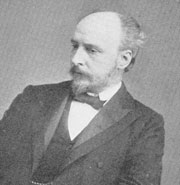
Men of Yore: Alexander Bell

This is another in a series of posts about men from history who have either achieved great things in one form or another by pushing boundaries: either in themselves or in society or science or exploration of some form. Boundary pushing and growth is what men do, it's their nature: to grow and push outwards. We, as men, are the frontiers men, the first to discover/uncover new territory, in a metaphysical sense (i.e. including both material and the immaterial) that is later colonised and 'civilised' by the rest of humanity.


Alexander Bell


Early Life

Alexander Graham Bell was born on March 3, 1847, in Edinburgh, Scotland. The second son of Alexander Melville Bell and Eliza Grace Symonds Bell, he was named for his paternal grandfather. The middle name “Graham” was added when he was 10 years old. He had two brothers, Melville James Bell and Edward Charles Bell, both of whom died from tuberculosis.

During his youth, Alexander Graham Bell experienced strong influences that had a profound effect on his later life. Bell’s hometown of Edinburgh, Scotland, was known as the “Athens of the North,” for its rich culture of arts and science. His grandfather and father were experts on the mechanics of voice and elocution. Alexander’s mother, who was nearly deaf, became an accomplished pianist and inspired him to undertake big challenges.

Eliza home schooled Alexander and instilled an infinite curiosity of the world around him. He received one year of formal education in a private school and two years at Edinburgh’s Royal High School. Though a mediocre student, he displayed an uncommon ability to solve problems. At age 12, while playing with a friend in a grain mill, he noticed the slow process of husking the wheat grain. He went home and built a devise with rotating paddles and nail brushes that easily removed the husks from the grain.

Early Attempts to Follow His Passion

Young Alexander was groomed early to carry on in the family business, but his headstrong nature conflicted with his father’s overbearing manner. Seeking a way out, Alexander volunteered to care for his grandfather when he fell ill in 1862. The elder Bell encouraged young Alexander and instilled an appreciation for learning and intellectual pursuits. By age 16, Alexander had joined his father in his work with the deaf and soon assumed full charge of his father’s London operations.

On one of his trips to America, Alexander’s father discovered its healthier environment and decided to move the family there. At first, Alexander resisted, for he was establishing himself in London, but eventually relented after both his brothers had succumbed to tuberculosis. In July, 1870, the family settled in Brantford, Ontario, Canada. There, Alexander set up a workshop to continue his study of the human voice.

Passion for Shaping the Future

In 1871, Alexander Graham Bell moved to Boston and began work on a device that would allow for the telegraph transmission of several messages set to different frequencies. He found financial backing through local investors Thomas Sanders and Gardiner Hubbard. Between 1873 and 1874, Bell spent long days and nights trying to perfect the harmonic telegraph. During his experiments, he became interested in another idea, transmitting the human voice over wires. The diversion frustrated Bell’s benefactors and Thomas Watson, a skilled electrician, was hired to refocus Bell on the harmonic telegraph. But Watson soon became enamored with Bell’s idea of voice transmission and the two created a great partnership with Bell being the idea man and Watson having the expertise to bring Bell’s ideas to reality.

Through 1874 and 1875, Bell and Watson labored on both the harmonic telegraph and a voice transmitting device. Though at first frustrated by the diversion, Bell’s investors soon saw the value of voice transmission and filed a patent on the idea. For now the concept was protected, but the device still had to be developed. On March 10, 1876, Bell and Watson were successful. Legend has it that Bell knocked over a container of transmitting fluid and shouted, “Mr. Watson, come here. I want you!” The more likely explanation was Bell heard a noise over the wire and called to Watson. In any case, Watson heard Bell’s voice through the wire and thus, he received the first telephone call.

With this success, Alexander Graham Bell began to promote the telephone in a series of public demonstrations. At the Centennial Exhibition in Philadelphia, in 1876, Bell demonstrated the telephone to the Emperor of Brazil, Dom Pedro, who exclaimed, “My God, it talks!” Other demonstrations followed, each at a greater distance than the last. The Bell Telephone Company was organized on July 9, 1877. With each new success, Alexander Graham Bell was moving out of the shadow of his father.

On July 11, 1877, Alexander Graham Bell married Mable Hubbard, a former student and the daughter of Gardiner Hubbard, his initial financial backer. Over the course of the next year, Alexander and Mable traveled to Europe demonstrating the telephone. Upon their return to the United States, Bell was summoned to Washington D.C. to defend his telephone patent from law suits by others claiming they had invented the telephone or had conceived of the idea before Bell.

Over the next 18 years, the Bell Company faced over 550 court challenges, including several that went to the Supreme Court, but none were successful. Even during the patent battles, the company grew. Between 1877, and 1886, over 150,000 people in the U.S. owned telephones. Improvements were made on the device including the addition of a microphone, invented by Thomas Edison, which eliminated the need to shout into the telephone to be heard.

Pursuing His Passion in His Final Years

By all accounts, Alexander Graham Bell was not a businessman and by 1880 began to turn business matters over to Hubbard and others so he could pursue a wide range of inventions and intellectual pursuits. In 1880, he established the Volta Laboratory, an experimental facility devoted to scientific discovery. He also continued his work with the deaf, establishing the American Association to Promote Teaching of Speech to the Deaf in 1890.

In the remaining years of his life Bell worked on a number of projects. He devoted a lot of time to exploring flight, starting with the tetrahedral kite in 1890s. In 1907, Bell formed the Aerial Experiment Association with Glenn Curtiss and several other associates. The group developed several flying machines, including the Silver Dart. The Silver Dart was the first powered machine flow in Canada. He later worked on hydrofoils and set a world record for speed for this type of boat.

In January 1915, Bell was invited to make the first transcontinental phone call. From New York, he spoke with his former associate Thomas Watson in San Francisco.

Bell died peacefully with his wife by his side in Baddeck, Nova Scotia, Canada, on August 2, 1922. The entire telephone system was shut down for one minute in tribute to his life.

Source: http://www.biography.com/#!/people/alexander-graham-bell-9205497#early-life
 
 
Communication networks are not given much consideration in modern times, except for the odd occasion when they are blocked up (like a clogged artery), or broken (like a downed electricity cable), or overloaded (like a road traffic jam), or inadequate to meet our needs (like an old fashioned railway network), yet the civilisation that we live in would not be possible without them.  These communication networks are as essential for technological civilisation as the communication networks in our human bodies are essential for us:
  • Without the nervous system transporting information around our bodies we (individually) would not know a thing about the outside world (the peripheral nervous system transports data from the sense organs to the central nervous system, spine & brain, for us to process), without the communication network transporting information around civilisation we (collectively) would not know a thing about the outside world (imagine a world without the internet, phone lines, or mail routes).
  • Without the circulatory system transporting nutrients around our body we simply would not be able to live (an arm without fresh blood quickly turns gangrenous), without the communication network (roads, rail, rivers etc) transporting goods around civilisation we would not be able to live.
Think of an isolated settlement in Alaska, the Australian outback or Siberia, and how dependent that settlement is on roads in order to have goods and information delivered to it; then imagine that settlement lost its communication network in a freak accident, it wouldn't last long would it?  That's how essential communication networks are for civilisation.

With this in mind it's a lot easier to appreciate the efforts of men who have dedicated their lives to improving the communication networks of civilisation, men like Graham Bell.

The result of innovations in communication networks, like the telephone, is that they have enabled civilisation to become more advanced.  They are comparable to the evolutionary leaps in biological communication networks that have allowed biological organisms to become more advanced.  Without men like Bell we would be like mere simple single-celled organisms, nothing more than amoebas bumbling around oblivious to outside world and unable to interact with it in any meaningful way.  But instead we are complex multi-celled organisms that are capable of both perceiving the outside world and interacting with it in any way that we choose.  That is what we should be thankful for: increased self-awareness and freedoms.

Obviously is preferable to be a complex organism than a simple one because it means that we have more control over our own destiny than less control.  The same principle applies to civilization as to the human body.  This is why we owe a great deal to men like these because they allow our civilization to advance, like evolution has allowed our human body to advance.


[End.]

Friday, 23 January 2015

Men of Yore: Carl Wilhelm Scheele

This is another in a series of posts about men from history who have either achieved great things in one form or another by pushing boundaries: either in themselves or in society or science or exploration of some form. Boundary pushing and growth is what men do, it's their nature: to grow and push outwards. We, as men, are the frontiers men, the first to discover/uncover new territory, in a metaphysical sense (i.e. including both material and the immaterial) that is later colonised and 'civilised' by the rest of humanity.


Carl Wilhelm Scheele

 
Carl Wilhelm Scheele (9 December 1742 – 21 May 1786) was a Swedish Pomeranian pharmaceutical chemist. Isaac Asimov called him "hard-luck Scheele" because he made a number of chemical discoveries before others who are generally given the credit. For example, Scheele discovered oxygen (although Joseph Priestley published his findings first), and identified molybdenum, tungsten, barium, hydrogen, and chlorine before Humphry Davy, among others. Scheele discovered organic acids tartaric, oxalic, uric, lactic, and citric, as well as hydrofluoric, hydrocyanic, and arsenic acids.[1] He preferred speaking German to Swedish his whole life, and German was commonly spoken among Swedish pharmacists.[2]


Early Life
Scheele was born in Stralsund, in western Pomerania, which was at the time part of Sweden. Scheele's father Joachim (or Johann) Christian Scheele, was a grain dealer and brewer from a respected German family. His mother was Margaretha Eleanore Warnekros.

Friends of his parents taught him the art of reading prescriptions and the meaning of chemical and pharmaceutical signs.[3] Then in 1757, at age fourteen, Carl was sent to Gothenburg as an apprentice pharmacist[2] with another family friend and apothecary, Martin Andreas Bauch. He retained this position for eight years. During this time he ran experiments late into the night and read the works of Nicolas Lemery, Caspar Neumann, Johann von Löwenstern-Kunckel and Georg Ernst Stahl (the champion of the phlogiston theory). Much of his later theoretical speculations were based upon Stahl.[3]

In 1765 he worked under the progressive and well informed apothecary, C. M. Kjellström in Malmö, and became acquainted with Anders Jahan Retzius, a lecturer at the University of Lund and later a professor of chemistry at Stockholm. Scheele arrived in Stockholm some time between 1767 and 1769 and worked as a pharmacist. During this period, he discovered tartaric acid, and with his friend Retzius, studied the relation of quicklime to calcium carbonate. While in the capital, he also became acquainted with many luminaries, such as Abraham Bäck, Peter Jonas Bergius, Bengt Bergius and Carl Friedreich von Schultzenheim.

In the fall of 1770 he became director of the laboratory of the great pharmacy of Locke, at Uppsala (about 40 miles north of Stockholm). The laboratory supplied chemicals to professor of chemistry Torbern Bergman, and a friendship developed after Scheele analyzed a reaction which Bergman and his assistant Johan Gottlieb Gahn could not resolve. The reaction was between melted saltpetre and acetic acid, producing a red vapor. Further study of this reaction later led to Scheele's discovery of oxygen (see "The theory of phlogiston" below). Based upon this friendship and respect, Scheele was given free use of Bergman's laboratory, both men profiting from their working relationship. In 1774 Scheele was nominated by Peter Jonas Bergius to be a member of the Royal Swedish Academy of Sciences and was elected February 4, 1775. In 1775 he also managed a pharmacy for a short time in Köping, and between the end of 1776 and the beginning of 1777, established his own business there.

On October 29, 1777, he took his seat for the first and only time at a meeting of the Academy of Sciences, and on November 11 he passed the examination as apothecary before the Royal Medical College, with highest honors. After his return to Köping he devoted himself, outside of his business, to scientific researches resulting in a long series of important papers.[3]


The Discovery of Oxygen
By the time he was a teenager, Scheele had learned the dominant theory of gases in the 1770s, the phlogiston theory. Phlogiston, classified as "matter of fire", was supposed to be released from any burning material, and when it was exhausted, combustion would stop. When Scheele discovered oxygen, he called it "fire air" because it supported combustion, but he explained oxygen using phlogistical terms because he did not believe that his discovery disproved the phlogiston theory.

Before Scheele made his discovery of oxygen, he studied air. Air was thought to be an element that made up the environment in which chemical reactions took place but did not interfere with the reactions. Scheele's investigation of air enabled him to conclude that air was a mixture of "fire air" and "foul air;" in other words, a mixture of two gases. He performed numerous experiments in which he burned substances such as saltpeter (potassium nitrate), manganese dioxide, heavy metal nitrates, silver carbonate and mercuric oxide. In all of these experiments, he isolated gas with the same properties: his "fire air," which he believed combined with phlogiston in materials to be released during heat-releasing reactions.

However, his first publication, Chemische Abhandlung von der Luft und dem Feuer, was delivered to the printer Swederus in 1775, but not published until 1777, at which time both Joseph Priestley and Lavoisier had already published their experimental data and conclusions concerning oxygen and the phlogiston theory. The first English edition, Chemical Observation and Experiments on Air and Fire was published in 1780, with an introduction "Chemical Treatise on Air and Fire".[4]
[..]


Scheele's Other Discoveries
In addition to his joint recognition for the discovery of oxygen, Scheele is argued to have been the first to discover other chemical elements such as barium (1774),[5] manganese (1774),[6] molybdenum (1778),[7] and tungsten (1781),[8] as well as several chemical compounds, including citric acid,[9] lactic acid,[10] glycerol,[11] hydrogen cyanide (also known, in aqueous solution, as prussic acid),[12] hydrogen fluoride,[13] and hydrogen sulfide (1777).[14] In addition, he discovered a process similar to pasteurization, along with a means of mass-producing phosphorus (1769), leading Sweden to become one of the world's leading producers of matches.
 
Scheele made one other very important scientific discovery in 1774, arguably more revolutionary than his isolation of oxygen. He identified lime, silica, and iron in a specimen of pyrolusite (impure manganese dioxide) given to him by his friend, Johann Gottlieb Gahn, but could not identify an additional component (this was the manganese, which Scheele recognized was present as a new element, but could not isolate). When he treated the pyrolusite with hydrochloric acid over a warm sand bath, a yellow-green gas with a strong odor was produced.[15] He found that the gas sank to the bottom of an open bottle and was denser than ordinary air. He also noted that the gas was not soluble in water. It turned corks a yellow color and removed all color from wet, blue litmus paper and some flowers. He called this gas with bleaching abilities, "dephlogisticated muriatic acid" (dephlogisticated hydrochloric acid, or oxidized hydrochloric acid). Eventually, Sir Humphry Davy named the gas chlorine.

Chlorine's bleaching properties were eventually turned into an industry by Berzelius, and became the foundation of a second industry of disinfection and deodorization of putrified tissue and wounds (including wounds in living humans) in the hands of Labarraque, by 1824.


Later Life
In the fall of 1785, Scheele began to suffer from symptoms described as kidney disease. In early 1786, he also contracted a disease of the skin, which, combined with kidney problems, so enfeebled him that he could foresee an early death. With this in mind, he married the widow of his predecessor,[3] Pohl, two days before he died, so that he could pass undisputed title to his pharmacy and his possessions to her.

While Scheele's experiments generated substances which have long since been found to be hazardous, the compounds and elements he used to start his experiments were dangerous to begin with, especially heavy metals. Scheele had a bad habit of sniffing and tasting any new substances he discovered.[16] Cumulative exposure to arsenic, mercury, lead, their compounds, and perhaps hydrofluoric acid which he had discovered, and other substances took their toll on Scheele, who died at the early age of 43, on 21 May 1786, at his home in Köping. Doctors said that he died of mercury poisoning .

Source: http://en.wikipedia.org/wiki/Carl_Wilhelm_Scheele

While Carl Scheeles discoveries may seem like irrelevant tinkerings of white-coated scientists in laboratories, tinkerings that are of no consequence to average John Does like thee & me, this could not be further from the truth. The truth is that Carl Scheeles discoveries have had innumerable positive impacts to the average man-on-the-street in ways that 19th century sci-fi writers couldn't even conceive of.

Take Scheeles discovery of oxygen for starters, it may seem like nothing important, and in a sense it is nothing to write home about (after all it's just a chemical element, one of 118 that we know of) but engineers and scientists have done marvelous things with that rudimentary element that we all benefit from in the most obscure ways.  The discovery of oxygen means that Goddard and other rocketeers could send ships and subsequently satellites into outer space.  Satellites means satellite technology: advanced tele-communications, watching b-movies on satellite TV late in the evening, viewing geo-sat images of famous landmarks on the internet, using a sat-phone to call a friend up while in trekking the Australian outback, using a GPS system to get you safely to your friends house, all practical technologies that wouldn't have happened were it for the discovery of oxygen by Scheele.  Who could've foreseen that satellites and intra-stellar travel would be made possible thanks to the discovery of a Swedish chemist who insisted on speaking German all his life?!

And remember that oxygen was just one of his discoveries!

Scientists, true scientists, are more than eccentric characters tinkering around with test tubes and bunsen burners contributing nothing to society.  True scientists give engineers, technicians, designers, inventors and other builders new building blocks (like oygen) with which to make new inventions, which in turn make the world a better place for all of us.  And that benefits us all, whether we're scientists or not.


[End.]

Friday, 9 January 2015

Men of Yore: Joseph Cyril Bamford

This is another in a series of posts about men from history who have either achieved great things in one form or another by pushing boundaries: either in themselves or in society or science or exploration of some form. Boundary pushing and growth is what men do, it's their nature: to grow and push outwards. We, as men, are the frontiers men, the first to discover/uncover new territory, in a metaphysical sense (i.e. including both material and the immaterial) that is later colonised and 'civilised' by the rest of humanity.


Joseph Cyril Bamford


Joseph Cyril Bamford CBE (21 June 1916 – 1 March 2001)[1] was a British businessman, who was the founder of the JCB company, manufacturing heavy plant.

 
Biography
Joe Bamford was born into a Catholic family from Uttoxeter in Staffordshire, which owned Bamfords Ltd, an agricultural engineering business.[2] His great grandfather Henry Bamford was born in Yoxall, and had built up his own ironmongers business, which by 1881 employed 50 men, 10 boys and 3 women. Bamfords International Farm Machinery became one of the country's major agricultural equipment suppliers, famous for its balers, rakes, hay turners, hay Wufflers, Mangold cutters, and standing engines, which were exported all over the world. The company eventually ceased trading in 1986.

After attending Stonyhurst College, Lancashire, Bamford joined the Alfred Herbert company in Coventry, then the UK's largest machine-tool manufacturer, and rose to represent the firm in Ghana. He returned home in 1938 to join the family firm, but in 1941 was called up by the RAF to serve in World War II. Working in supply and logistics, he returned to the African Gold Coast, to run a staging post for USAF planes being ferried to the Middle East.[1]


JCB
On return home in 1944, Bamford initially worked for English Electric developing electric welding equipment in Stafford. A short return stint with the family firm proved too stifling, and his Uncle Henry released him, saying he thought Joe had "little future ahead of him."[2] After selling Brylcreem for a short while, in October 1945 Bamford rented a 10 ft (3 m) by 15 ft lock-up garage for 30 shillings (= £1.50) a week, and made a farm trailer from scrap steel and war surplus Jeep axles, using a prototype electric welder bought for £2-10s (= £2.50). He opened for business on the day his first son, Anthony, was born,[2] and sold the trailer for £45 and a cart, which he also repaired and sold for another £45.[1]

Having no interest in taking over rival businesses, his philosophy of: "Focus on what you do best, be innovative, and re-invest in product development and the latest manufacturing technologies;" resulted in a series of market-leading innovations:
  • 1948 - introduced the first hydraulic tipping trailer in Europe
  • 1950 - moved to an old cheese factory in Rocester where the workforce totalled six
  • 1951 - began painting his machinery yellow
  • 1953 - brought out his breakthrough product, the backhoe loader
  • 1957 - brought out the "hydra-digga", incorporating the excavator and the major loader as a single all-purpose tool which was useful for both the agricultural as well as construction industry, which JCB grew with[2]
  • 1991 - brought out the JCB Fastrac high speed agricultural tractor.
With exports starting to the United States, profits escalated from 1960 onwards. JCB won seven Queen's Awards for Exports as its sales spread to more than 130 countries around the world, while Bamford himself was awarded a CBE for Services to Export in 1969.[1] In 1993 became the first British citizen to be honoured in the Association of Equipment Manufacturers Hall of Fame and remained the only British inductee until his son Anthony Bamford was inducted in 2008.[3]


Marketing
What made Bamford different from many engineers was that he was also a marketeer. Bamford personally demanded to know daily from his staff how many "JCB Yellow" vehicles were off the road awaiting spares. Bamford created an image that JCB's were there to work, and if an owner-operator’s machine was down, then Bamford wanted to know about it—which gained him 95% of the owner-operator market in the UK.[4]

Bamford placed a 12 V socket into the cab of his vehicles, and delivered the first 100 personally, arriving in his Rolls Royce with number plate JCB1. One of the first Learjets in Europe was purchased to fly in non-UK customers (the fleet has since got larger[5]), who were met by another European first, a stretched Cadillac with the same number of seats as the jet. Bamford also conceived the "dancing diggers," whose 1999 display in Las Vegas stopped the gamblers.[2]


Personal Style
A non-smoking teetotaller, who was so careful with his money that he claimed his wife still made their own curtains, Bamford worked from 09:00 until 23:00 every day. He saw his role in life similarly to that of his religious predecessors, the Cadbury and Lever families. He built Rocester along the lines of Bourneville and Port Sunlight into an effective marketing home for the company, and an efficient production centre and a virtual "home" for his employees. He saw no need to recognise Unions. The Rocester works were surrounded by 10,000 acres (40 km2) of landscaped grounds in which his company's employees could shoot, fish, swim, and sail.[1]

Bamford paid more than fair wages, which rose regularly, and annual bonuses based on reports of individual worth. In 1967 Bamford stood on a farm cart and handed out personal cheques totalling £250,000. This extraordinary focus in return gave unprecedented levels of workforce flexibility, with the average JCB employee through the strike-dominated 1970s and early 1980s being seven times more productive than the average British manufacturing worker.[1]


Retirement
In 1975 Bamford and his wife Marjorie (née Griffin - married 1941) handed over the business to their two sons,[6] and retired to Switzerland as tax exiles. He continued to design both boats and diesel engines. Bamford was awarded the honorary degree of a Doctor of Technology from both Loughborough University in 1989;[7] and Keele University in 2000.[8]

Bamford died in a London clinic on 1 March 2001.[1] At his death, JCB was the largest privately owned engineering company in Britain, employing 4,500 people and manufacturing 30,000 machines a year in 12 factories on three continents. It had revenues of £850m in 1999, earned from 140 countries.[2]

His portraits by Lucinda Douglas-Menzies and Leslie Smithers (whilst he was still the head of his JCB Empire) sit in the National Portrait Gallery.[9]sl

Source: http://en.wikipedia.org/wiki/Joseph_Cyril_Bamford

You've no doubt seen some of the distinctive, trademark yellow JCB equipment (pictured right) engaged in construction work some time in your life, well those JCB vehicles were the result of Mr Joseph Cyril Bamford designing good vehicles, manufacturing good vehicles, and marketing good vehicles.  It's the whole trio that's made JCB a worldwide name.  A three legged stool on which his success is built you could say!

Like Henry Ford, Cyril Bamford had a good engineering brain, which he made good use of when designing his equipment.  Again like Henry Ford Bamford also treated his workforce very well: he looked after them, paid them above average wages, and rewarded them as well (a paternalistic way of running a business, in contradistinction to the Libertarian outlook which is system oriented rather than people oriented).  And finally he had a good nack of getting his ideas out there in the wider world, by painting them a distinctive yellow colour.  This made his company well known to both the construction community to whom he sold his products and the general public as well, allowing his company to grow and grow.  All three of these attributes are what made him successful.  And it's these three attributes that allow us to benefit (in the various civil engineering works) via an improved quality of life (well maintained roads & transportation, utilities, etc), even if we have absolutely nothing to do with JCBs, plant machinery or engineering.


[End.]

Friday, 2 January 2015

Men of Yore: Barthélemy Thimonnier

This is another in a series of posts about men from history who have either achieved great things in one form or another by pushing boundaries: either in themselves or in society or science or exploration of some form. Boundary pushing and growth is what men do, it's their nature: to grow and push outwards. We, as men, are the frontiers men, the first to discover/uncover new territory, in a metaphysical sense (i.e. including both material and the immaterial) that is later colonised and 'civilised' by the rest of humanity.

Barthélemy Thimonnier


Barthélemy Thimonnier, (August 19, 1793 in L'Arbresle, Rhône - July 5, 1857 in Amplepuis), was a French inventor, who invented the first sewing machine that replicated sewing by hand.

 
Early life
In 1795, his family moved to Amplepuis. Thimonnier was the oldest of seven children. He studied for a while in Lyon, before going to work as a tailor in Panissières. Barthelemy Thimonnier married an embroideress in January 1822. In 1823, he settled in a suburb (or called a commutety) of Saint-Étienne and worked as a tailor there.


Invention of the sewing machine
In 1829, he invented the sewing machine and in 1830 he signed a contract with Auguste Ferrand, a mining engineer, who made the requisite drawings and submitted a patent application. The patent for his machine was issued on 17 July 1830 in the names of both men, supported by the French government. The same year, he opened (with partners) the first machine-based clothing manufacturing company in the world. It was supposed to create army uniforms. However, the factory was burned down, reportedly by workers fearful of losing work following the issuing of the patent.

A model of the machine is exhibited at the London Science Museum. The machine is made of wood and uses a barbed needle which passes downward through the cloth to grab the thread and pull it up to form a loop to be locked by the next loop.

The earliest sewing machine was actually patented by Thomas Saint in 1790. So Thimonnier's machine was not the first. Saint's contribution was not made public until 1874 when William Newton Wilson, himself a sewing machine manufacturer, found the drawings in the London Patent Office and built a machine which worked following some adjustments to the looper. So, in 1790 Thomas Saint had invented a machine with an overhanging arm, a feed mechanism (adequate for the short lengths of leather he intended it for), a vertical needle bar and a looper. The London Science Museum has the model that Wilson built from Saint's drawings.


Later life
Thimonnier then returned to Amplepuis and supported himself as a tailor again, while searching for improvements to his machine. He obtained new patents in 1841, 1845, and 1847 for new models of sewing machine. However, despite having won prizes at World Fairs, and being praised by the press, use of the machine did not spread. Thimonnier's financial situation remained difficult, and he died in poverty at the age of 64.
The Thimonnier sewing machine company, created after his death, existed up to the 20th century.

Source: http://en.wikipedia.org/wiki/Barth%C3%A9lemy_Thimonnier

Like with many labour-saving contraptions it's not enough to have been the first to invent it you must also, and always, shout about it to the world (market it and publicise it like Samuel Colt did with his revolver), otherwise no-one will ever here about it.  It's why Barthélemy Thimonnier's invention took off while Thomas Saint's invention languished in the patents office collecting dust: Because Thimonnier marketed, publicised, and made use of his device on a large scale (a factory) and Saint did not.  That's why we have Thimonnier to thank as much as, if not slightly more than, Saint, because it was he who made the time/labour-saving device well known to the world.

If you've ever tried darning (sowing together) a hole in your socks then you'll know much time it takes to sow, how arduous, and laborious it is.  If we didn't have men like Thimonnier kicking around to invent labour-saving devices like sowing machines then tasks like darning socks, or sowing clothes together, would take an inordinate amount of time.  Time that could be better spent doing other things. 

All labour-saving devices are of great use to 'all' men, regardless of how connected a given man personally feels to them.  Just think of some of the labour saving devices that you have directly or indirectly used while eating breakfast:
- Flour mills which were used to grind the flour to make your toast.  (Which replaced hand-operated quern stones.)
- Dairy milking machines which were used to extract the milk for your coffee, and butter for your toast.  (Which replaced hand-milking.)
- Movable type which were used in the printing of the newspaper you read.  (Which replaced scribe/hand-written books.)
- Jacquard loom (another Frenchman's invention) which was used to make the patterned fabric that you're wearing.  (Which replaced hand-weaving).
- Sewing machines which were used to stitch together your clothes, carpet, curtains, table cloth etc.  (Which replaced hand-sowing.)

These Labour/Time-saving devices, and many more, have allowed men (both individually and collectively) to spend their daylight hours engaged in other activities, things besides grinding flour, copying books and sowing clothes together - to spend their time in ever increasingly productive activities.  It's fair to say that without machines like the the sowing machine man could not have walked on the moon.  It may seem like an audacious comment to make, but it's true.  Machines like Thimonnier's sowing machine meant that fewer tailors had to be employed making clothes; and because they didn't have to spend their time sowing clothes together they could study or work in other fields and thus become more productive workers (in purely economic terms).  Perhaps even inventing their own labour-saving devices or improving pre-existing labour-saving devices.  In turn it means that more men could study and learn and invent their own contraptions, or come up with their own theories, and experiments and all that malarky.  It's all good.  Labour-saving devices do nothing but good, ergo they, and their inventors, should get the credit they deserve every once in a while.

Bob Wallace summed it up well last week when he said "..technology is here to stay. It's not going away, ever. It'll only advance, as it always has."; and even if that technology is only a humble little sowing machine then it's technology that we're certainly better off for having.


[End.]

Friday, 19 December 2014

Men of Yore: Gustaf Dalén

This is another in a series of posts about men from history who have either achieved great things in one form or another by pushing boundaries: either in themselves or in society or science or exploration of some form. Boundary pushing and growth is what men do, it's their nature: to grow and push outwards. We, as men, are the frontiers men, the first to discover/uncover new territory, in a metaphysical sense (i.e. including both material and the immaterial) that is later colonised and 'civilised' by the rest of humanity. 


Nils Gustaf Dalén


Nils Gustaf Dalén was born at Stenstorp in Skaraborg, Sweden on November 30, 1869, the son of a farmer. After his preliminary education, he entered a School of Agriculture to study dairy farming but he was later advised by Gustaf de Laval, who recognized his natural gift for mechanics, to seek a technical education. He prepared himself for the Chalmers Institute at Gothenburg and gained admission in 1892. He graduated as an engineer in 1896 and spent a year in Switzerland, studying under Professor Stodola at the Eidgenössisches Polytechnikum.

On his return to Sweden, Dalén carried out some research at Gothenburg and set up as a consulting engineer. He became Technical Chief of the Svenska Karbid- och Acetylen A.B. (Swedish Carbide and Acetylene, Ltd.) in 1901 and he later joined the Gas Accumulator Company where he became Chief Engineer in 1906. In 1909, the company was reorganized as Svenska Aktiebolaget Gasaccumulator (AGA) (Swedish Gas Accumulator Ltd.) with Dalén as Managing Director.

Dalén's inventiveness first showed in his early days on his father's farm when he built a threshing machine powered by an old spinning wheel. He contrived a device to indicate the butterfat content of milk and thereby made his contact with de Laval. On completion of his advanced education, he worked on the construction of a hot-air turbine and related air compressors and pumps. He also invented a pasteurization apparatus and a milking machine.

In 1901, Dalén's company purchased the patent rights of the French invention of dissolved acetylene and he began his work on automatic flashing beacons for lighthouses. His subsequent invention of the sun-valve, which causes a beacon to light automatically at dusk and extinguish itself at dawn, enabled lighthouses to function perfectly and unattended for periods of up to a year. His invention of cylinder filled with a porous mass of asbestos and diatomaceous earth for storage of acetylene reduced considerably the hazards in handling this material and its use in welding became safe. He also invented a mixer for providing a constant and correct balance of gas and air for use in the incandescent mantle and a device for removing broken mantles and replacing them by new ones.

In 1912, whilst testing safety devices on cylinders of acetylene in an outdoor location, and when satisfactory safety precautions had been taken, a sudden explosion seriously injured Dalén and caused the loss of his eyesight. He recovered from his other injuries and overcoming his great incapacity, continued his researches. He was awarded the contract for lighting the Panama Canal and later turned to the field of thermal technics to invent a stove [the Aga cooker - ed], now in universal use, which maintains cooking heat for 24 hours using only eight pounds of coal.

Dalén's writings were few, but he left his mark in a practical way by the provision of light, and therefore safety, for the benefit of travellers by land, sea and air.

Amongst the many distinctions conferred upon Dalén are membership of the Swedish Royal Academy of Sciences, 1913, and the Academy of Science and Engineering, 1919. He was made Honorary Doctor of Lund University in 1918 and received the Morehead Medal of the International Acetylene Association. He took part in debates at the National Society of Economics and served on the Lidingö City Council for almost twenty years.

Dalén married Elma Persson in 1901. They had two sons and two daughters. Their eldest son, Gunnar, qualified as an engineer and followed his father as a Director of AGA; their younger son, Anders, became a Doctor of Medicine; Gustaf's brother Albin, a famous ophthalmologist, was a Professor at the Caroline Institute.

Dalén died on December 9, 1937, in his villa at Lidingö.


Source: http://www.nobelprize.org/nobel_prizes/physics/laureates/1912/dalen-bio.html
Gustaf Dalen invented a light-sensitive valve (the sun valve), the Aga cooker, and the lighting for the Panama Canal, and founded the AGA AB chemical works company, amongst many other things.  Not a bad variety for a Nobel Physics Prize winning scientist eh?!  A whole menagerie of high-utility inventions from just man.

One of his inventions, the Aga cooker, is particularly pertinent at this time of year because of course we have Christmas fast approaching which means many needs have to be met including: Christmas dinner (which needs cooking), heating (which is provided for by a gas boiler), and hot water (for that long relaxing bath).

The Aga Rangemaster Group, which Dalen founded, is responsible for the Rayburn Range, which was an improvement on the Aga Cooker because of its high-utility value: It can heat food in pans; It can heat food (or other things) in ovens; It can heat water (e.g. for washing bodies or clothes or dishes, etc); It can heat water for use in radiators around the house; It can be powered by kerosene, diesel, biofuel, gas or electricity.  In short, it's a single household appliance that serves many many purposes.

This emphasis on high-utility is very different to the kitchen appliances of the 2010's where single-purpose appliances exist for pretty much every conceivable need.  e.g. the toaster for heating bread, an electric kettle for heating ~1 litre of water, an electric steamer for steaming vegetables, an electric deep fryer for chips and doughnuts, the electric grill plate, etc etc.  All quite expensive (~£30 per item) and all utterly superfluous if you own a simple, conventional oven and a basic few pots and pans.  And let's not forget that you will see many of these appliances advertised down the local shopping centre as Christmas gifts competing for your attention and hard earned cash.

High-utility appliances like the Aga and Rayburn are something to be thankful for because they save us time and effort and cut down on waste, particularly on superfluity.  It's something to think about when we are cooking our Christmas dinner in our warm houses.  And let's not forget that we have Gustaf Dalen to thank for it.


[End.]
 

Monday, 15 December 2014

Alternative Lyrics to Well Known Songs 34 - Pessimism Wants to Rule Your World

(Based on the song 'Everybody Wants to Rule the World' by Tears for Fears)

Life comes first, death comes second.  Joy comes first, misery comes second.  Joy does not need misery, yet misery needs joy.  Misery is contingent upon joy (just as death is contingent upon life), and joy is not contingent upon anything.

Misery conspires to deny joy.  Be aware of those who seek to deny you joy.

The important thing to remember, to always remember, while reading anything by an old misery guts, a pessimist or a doom-sayer (like an armaggedon-loving Christian, or a proponent of toxic meme 'enjoy the decline' etc) is that they are miserable.  Because they are miserable they seek to deny joy to everyone, and that includes you.  To deny anyone joy, or even worse to deny the opportunity of joy, is immoral.  God provides/provided you with both 'Will' (which is concurrent with joy) and the 'Freedom' to do it in.

The pessimists and the doom-sayers want to deny you that ability to 'go your own way', to do your own thing, to do something other than what they say.  They want to determine your future 100%.  To nail it deep down underground as a prisoner, and keep it there.  They want to determine your future as railway-lines determine where a railway-locomotive goes, that's what they want to do.  They want to deny you freedom.  So shrug your shoulders at them, ignore them; or yell at them, fight them.  Do whatever you need to do to get them out of your way.  They're arseholes.  You don't need them.  They need you.  Life doesn't need death, joy doesn't need misery, you don't need them.  Always remember this.  Remember this if you stumble across them or their works; remember that they strive to deny you joy and then remember you have a options and the ability to choose, to go your own way, Gods way, whatever way that may be.  Each to his own.

Finally a word on the lyrics: They are written from the perspective of Pessimism as an entity, as an actual person, and it is speaking to someone who is a newcomer to Western culture.


Play the song in the video above and sing along using the alternative lyrics given below.


# Pessimism Wants to Rule Your World #
Welcome to the West.
It's not like it seems.
Everywhere you turn.
You will find me.

Sapping at your joyous outlook.
Confounding your positive nature.
Pessimism wants to rule your world.

It is by design.
It is for the worst.
I want to deny.
I want to destroy.

Your freedom and your pleasure,
I want to deny for ever.
Pessimism wants to rule your world.

There's no place where my hate won't find you.
Nagging away 'til your heart comes crashing down.
When it does I'll have destroyed you.

My goal's to incarcerate.
Trap you, never let you out.
Pessimism wants to rule your world.

I can't stand your optimism.
Nor your long-distance vision.
Pessimism wants to rule your world.
Hate is all I ever, ever, ever, ever needed.
Why did you have to ruin it?
Pessimism wants to rule the world.

Your freedom and your pleasure,
I want to deny for ever.
Pessimism wants to rule your world.

[End.]

Friday, 12 December 2014

Men of Yore: James Dewar

This is another in a series of posts about men from history who have either achieved great things in one form or another by pushing boundaries: either in themselves or in society or science or exploration of some form. Boundary pushing and growth is what men do, it's their nature: to grow and push outwards. We, as men, are the frontiers men, the first to discover/uncover new territory, in a metaphysical sense (i.e. including both material and the immaterial) that is later colonised and 'civilised' by the rest of humanity.


Sir James Dewar

Sir James Dewar was born in Kincardine, Scotland, on September 20, 1842, the son of an innkeeper. He attended local schools until he was ten when he suffered a serious case of rheumatic fever lasting two years. During this period he built a violin, and music remained a lifelong interest of his. In 1858 he entered the University of Edinburgh. There he studied physics and chemistry. Dewar, in an early display of his dexterity, developed a mechanical model of Alexander Crum Brown's graphic notation for organic compounds. This was sent to Friedrich Kekulé in Ghent who then invited Dewar to spend some time in his laboratory.

After holding a number of chemical posts in Scotland, Dewar was appointed Jacksonian Professor of Natural Philosophy at the University of Cambridge in 1873, and four years later he was appointed Fullerian Professor of Chemistry at the Royal Institution. He held both chairs concurrently, but spent most of his time in London. At Cambridge he collaborated with George Downing Liveing on an extensive spectroscopic study linking spectra with atomic and molecular states. This led to a very public disagreement with Norman Lockyer about the dissociation of matter in the Sun and stars. One of Dewar's chief characteristics was his ability to engage, at times, in quite vitriolic arguments with other scientists; Robert John Strutt, the fourth Lord Rayleigh wrote that to argue with Dewar was akin to being a fly in molasses.

At the Royal Institution, Dewar found himself at the intersection of major scientific networks involving the government and industry. He thus collaborated in the late 1880s with Frederick Abel on the invention of the explosive cordite. Nevertheless, at the Royal Institution Dewar focused almost entirely on cryogenics. In 1877 oxygen had been liquefied in France, and the following year Dewar demonstrated this for the first time in England at a lecture at the Royal Institution. New methods for obtaining low temperatures were developed in the 1880s, but Dewar's ability to take advantage of these methods was restricted by his not being fully in charge of the Royal Institution. However, after forcing John Tyndall's retirement in 1887, Dewar became the director of its laboratory. He improved low-temperature methods, especially by the application of the Joule–Thomson effect that produced much lower temperatures. Dewar had now turned his attention to hydrogen, which he could not liquefy even at the low temperatures obtainable.

In the mid-1890s Dewar was responsible for one of the most important developments in the history of the Royal Institution: the establishment and endowment of the Davy–Faraday Research Laboratory of the Royal Institution. This not only entailed the acquisition of a new building, but also the direct support of Dewar's cryogenic research. Success came in 1898 when he finally liquefied hydrogen. However, in the race with Heike Kamerlingh Onnes at the University of Leiden to liquefy helium, Dewar lost and the Nobel Prize went to Kamerlingh Onnes. Although Dewar was nominated several times, he never won the coveted prize.

One of the consequences of Dewar's work was his invention of the vacuum flask to minimize heat loss. It was expensive and time-consuming to liquefy gases; hence, Dewar designed a container where, once liquefied, gases could be kept for as long as possible. Still known as the Dewar flask among chemists, it is more widely known as the Thermos, named after the company that obtained the patent for the flask and to whom Dewar lost an ensuing court case.

Dewar's later work involved investigating the chemical and physical properties of substances at low temperatures, including low-temperature calorimetry. With the outbreak of the Great War (or World War I, 1914–1918), the laboratory at the Royal Institution lost most of its staff and Dewar turned his attention to soap bubbles. By the end of the war Dewar, now in his late seventies, did not have the energy to restart the laboratory, nor would he retire. He died on March 27, 1923, and his funeral service was held in the director's flat at the Royal Institution.

Source: http://www.chemistryexplained.com/Co-Di/Dewar-James.html


Question:  What connects superconductors (used in MRI scanners and mag-lev trains) with vacuum flasks (used by businessmen and old women)? 

Answer:  James Dewar.

If ever you hear anyone doubt that what all scientists produce is of little value to the average John Doe on an average day in an average city, then just think of James Dewar.  Think what his studies on liquification of gases have led to in terms of practical everyday inventions.  Think of what they have allowed us to do:
  • They have allowed us to travel on super-fast, super-smooth mag-lev trains to commute to work and back.
  • They have allowed us to have our brains scanned for signs of tumours & cancerous growths.
  • They allow us to sit at car-boot sales (or flea markets/swap meets) and sup hot cups of tea in the cold mid-Winter.
These are just a few mundane examples of what scientists beavering away in laboratories can achieve when their abstract findings are utilised in practical projects.  All that needs to be done is for both sides of the dualistic coin to be utilised (noos & phusis, abstract & practical, thinking & doing, or however you wish to phrase it) by men for whatever their Will is.


[End.]

Monday, 8 December 2014

Alternative Lyrics to Well Known Songs 33 - Left Wingers

(Based on the song 'Young Parisians' by Adam and the Ants)

This week we have a slightly sardonic song about those funky political Lefties and their attraction to all things un-attractive, written/sung from the perspective of a right-winger who lives in the countryside.

If you look at Lefties for long enough you begin to notice that their mindset tends towards things that are un-appealing and antagonistic to life in general: un-appealing to the eye (e.g. art of 'shark in a tank' Hirst or 'unmade bed' Emin), un-appealing to the ear (e.g. music of Schoenberg), antagonistic to family life (e.g. single-mother families and Communes/Kibbutzim), antagonistic to moderation (e.g. vulgarity of Hollywood movies and cosmetic surgeons), modern-architecture (e.g. the Guggenheim museum) and so on.  All in all they tend towards things that are excessive and un-appealing to humans.  Which is why so many of the political right, and those who are a-political, are repulsed by them.

But it's not enough to want to gouge your eyes out every time you see a Damien Hirst, or wail if you hear a Schoenberg, you have to be able to point and laugh at all of them every once in a while.  Getting indignant and stressed out every time you see some left-wing abomination may be useful, and certainly is, because the works (art, music, and anything produced) ARE an affront to decency and indeed to life itself, but it's no good for you personally.  Too much stress causes an increase in Cortisol production which in turn is responsible for increased risk of heart disease.  And men are suffering from enough stress as it is without adding to the pile.

Which is of course why this song is here: to poke fun at the lefties!  And to remind you to laugh at them every once in a blue moon.

A final word on the lyrics: The word 'queer' is used in the old English sense, as in 'odd or strange', rather than the modern usage of the word as 'homosexual'.  Though if you want to think of it in the modern sense, or even the pejorative sense, then that's entirely your prerogative.  I'm not implying that lefties are closet-homosexuals (like Lib-Dem politician Mark Oaten), or should be mocked, oh no, that would be wrong!


Play the song in the video above and sing along with the alternative lyrics given below.


# Left Wingers #
These left-wingers are so queer.
They love Tracey Emin.
These left-wingers are so queer.
All there art is c-rap.

I wanna go to-the city with you
just to see what the lefties do.
Why don't you come to the city with me
And chuckle at left-wingers.

These left-wingers are so queer.
Listening to Schoenberg.
These left-wingers are so queer.
Not like me and you

I wanna go to-the city with you
just to see what the lefties do.
Why don't you come to-the city with me
And chuckle at left-wingers.

I wanna go to-the city with you
just to see what the lefties do to you.
Why don't you come to-the city with me
And chuckle at left-wingers.

These left-wingers are so queer.
They live in a commune.
These left-wingers are so queer.
It drives them insane.

I wanna go to-the city with you
just to see what the lefties do to you.
Why don't you come to-the city with me
And chuckle at left-wingers.

They're so queer.
They're so queer.
They're so queer.
Ah oooh!


[End.]