Monday, 21 October 2013

Alternative Lyrics to Well Known Songs 8 - Ferdinand the Second

[Pre-amble: This is one in a series of posts which includes an alternative set of lyrics to a well known song.  Each post will also contain a short introduction to the topic at hand, and a brief explanation of the song itself.  A video of the original song will be included so that the reader can listen to the original song while reciting the alternative lyrics at the same time.]


The Song: Ferdinand the Second (based on 'Buddy Holly' by Weezer)
This time around we have an historically themed song for any Spanish or Iberian Nationalists who happen to frequent this blog.  It includes references to Spanish Champions such as Ferdinand the Second and Isabella, the Knights of Santiago, the Knights of Calatrava, Manus Dei (the Hands of God), and the Reconquista.  (And not forgetting a mention of everyone’s favourite fifth columnists the Marrano Jews!).
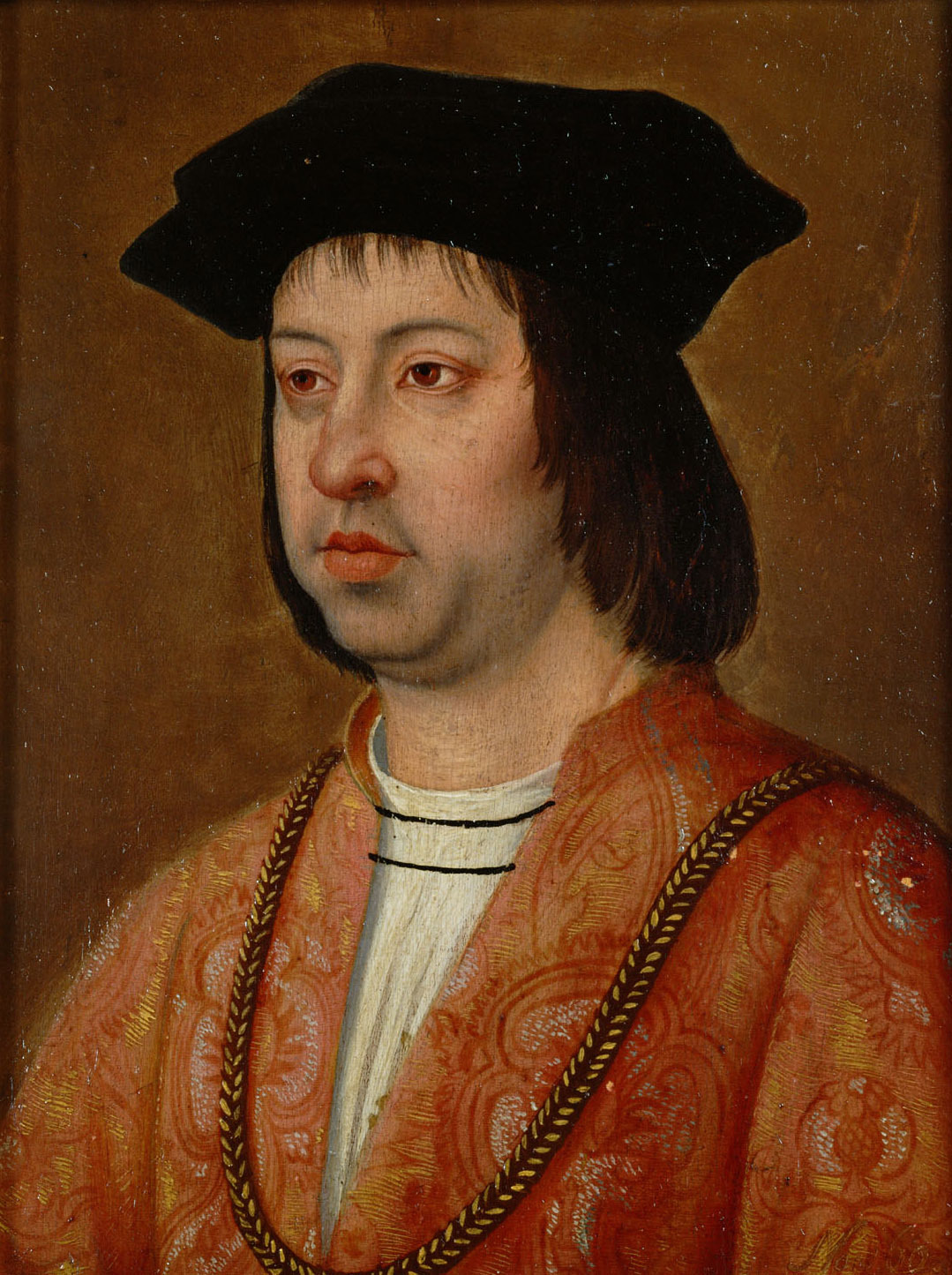
Ferdinand the Second was a Spaniard and a King who retook Spain from the invading Moors.

The Reconquista was one of the efforts by Nationalists during the Medieval period to retake Their land back from invaders.  The situation required Nationalists to act because the Roman Catholic Church did nothing to help them.  The Roman Catholic Church was too busy using the abomination known as indulgences to extract money from the population to pay for the Churches lavish furnishings (those jewel-encrusted solid-gold crucifixes don't come cheap ya know!).  In fact the practice of the Roman church then is comparable to the practice of the State today: both simultaneously bled the native population dry of money whilst allowing foreigners to invade and genocide them.  If you compared the old priestly caste to the modern priestly caste then you probably wouldn't be able to fit a proverbial cigarette paper between them.

In the end it was Nationalists who defended Europe and Christendom from foreigners and foreign belief systems.  White Nationalists took their land back by using Military Orders (like the Knights of Santiago) who were a continuation of a Pre-Christian tradition: a small dedicated group of professional warriors (called Hearthmen or hirð  in the Nordic culture) would do most of the fighting and non-professional would be used as a support force.  I think this is worth noting because it means that the Military Orders should not be grouped together with the rest of the immoral Roman Catholic Church, and should not be judged as Anti-White.  Nor, on a side note, should Shamans be mistaken for priests.

The Roman Catholic Church did not protect it's nations from defence against invaders, it was Nationalists who did this.  Iberian Nationalists retook their homeland from the Moors, Balkan Nationalists Vlad Tepes of Wallachia and Stephen the Great of Moldavia fought bravely against the Ottomans, and Russian Nationalist Ivan the IV of Moscow threw off the Yolk of the Mongol Horde.  Nationalists, not Christians, are who we have to thank for a White Europe.  Always remember that whenever you happen to walk past a Cathedral, or Church, or indeed read a Bible and not a Koran, that it was Nationalists like Ferdinand the Second that allowed Christianity and Christians to continue to exist in Europe.


# Ferdinand the Second #
What's with these Moors they've invaded my land?
What do they want from us?
What did we ever do to these Moors,
That made them invade us?

Ooh ooh, know I hate the Moors.
Ooh ooh, and know Spain is mine.
Ooh ooh, and that's what God has said.
Ooh-eeh-ooh I am Ferdinand the Second.
Oh-oh and she's Isabelle the First.
This is Spain and it's only for the Spaniards.
Let's kick these Moors right out.

Knights Santiago and Calavaro,
are the known as 'Manus Dei'.
'cause 'Reconquista' is such an order,
straight from the mouth of God.

Ooh ooh, know I hate the Moors.
Ooh ooh, and know Spain is mine.
Ooh ooh, and that's what God has said.
Ooh-eeh-ooh I am Ferdinand the Second
Oh-oh and she's Isabelle the First.
This is Spain and it's only for the Spaniards.
Let's kick these Moors right out.
Kick these Moors right out.

Bang bang knock down the door,
Knock down the door of Castle du Moor.
Oh know what do we see,
Look it's another Marrano Hebe.
We can't trust them not to stick,
Another traitorous blade in our back.
Chase 'em and a chase 'em and a chase 'em out.
Chase 'em all out these Judas goats.

Uh oh oh uh oh oh.

(And that's what God has said.)

Ooh-eeh-ooh I am Ferdinand the Second.
Oh-oh and she's Isabelle the First.
This is Spain and it's only for the Spaniards.
Let's kick these Moors right out.
Kick these Moors right out.

[End of lyrics.]

Friday, 18 October 2013

Men of Yore: Edward Jenner

This is another in a series of posts about men from history who have either achieved great things in one form or another by pushing boundaries: either in themselves or in society or science or exploration of some form.  Boundary pushing and growth is what men do, it's their nature: to grow and push outwards.  We, as men, are the frontiers men, the first to discover/uncover new territory, in a metaphysical sense (i.e. including both material and the immaterial) that is later colonised and 'civilised' by the rest of humanity.


Edward Jenner
Edward Jenner (17 May 1749 – 26 January 1823) was an English doctor who popularised a vaccination for smallpox and became the father of immunology.
Edward Jenner was born in Berkeley, Gloucestershire on 18th May 1749. The son of a local vicar he was interested in natural history and medicine from an early age. Aged 14, he began his training to be a doctor in Chipping Sodbury, Gloucestershire before completing his training in London. He studied at St George's Hospital under surgeon John Hunter and was influenced by his philosophy of seeking new discoveries - "Don't Think, try"
In 1773, Jenner returned to his native Berkeley to become a general practitioner. In his spare time, he pursued his study of native wildlife and also new developments in medical science.

Jenner and Vaccine for Small Pox
At the time, one of the most feared diseases was smallpox. The disease was common and killed up to 33% of those who contacted it. At the time, there was little known treatments or vaccinations that could prevent it.

Jenner was interested in the observation that milkmaids who were in close contact with cows, very rarely contacted the disease. With this revelation, Jenner was interested in testing a theory that inoculating humans with a strain of the cowpox virus could protect them from smallpox through the immunity from the similar, but much less dangerous, cowpox strain.

This practise of using a cowpox virus had been tried on odd occasions before, for example farmers such as Benjamin Jesty had deliberately arranged cowpox infection for their family. However, these unofficial tests had not proved anything to a sceptical medical scientific community.

In 1796, Jenner tested his theory by inoculating James Phipps, a young boy of 8 with cowpox blisters from the hand of a milkmaid who had caught cowpox. The young, James, contacted a mild fever, but, to Jenner's relief, when he gave James Phipps variolous material, he proved resistant to this mild form of small pox. He wrote in 1801

'It now becomes too manifest to admit of controversy, that the annihilation of the Small Pox, the most dreadful scourge of the human species, must be the final result of this practice (BBC Smallpox)

To Jenner, this immunity to Variolation was proof that the cowpox inoculation gave immunity from smallpox. Thus, Jenner had provided a relatively safe way to immunise people from the deadly smallpox virus.

"The joy I felt as the prospect before me of being the instrument destined to take away from the world one of its greatest calamities (smallpox) was so excessive that I found myself in a kind of reverie"
- Edward Jenner

Jenner went on to test in theory on a further 23 subjects - all of which gave the same results. After some delay, his research was published by the Royal Society to a mixture of scepticism and interest. After this, Jenner gave up his medical practise and devoted himself full time to immunisation work. He was given a grant from Parliament to support him in his work. This involved setting up the Jennerian Institution a society concerned with promoting vaccination to eradicate smallpox.

This would eventually be successful, in 1840, 17 years after Jenner's death, the British government, in an act of Parliament, banned the use of variolation and provided the cowpox inoculation free of charge. By 1979, the World Health Organisation (WHO) had declared smallpox extinct - a remarkable achievement of which Jenner's ground-breaking work on immunisation played a key role.

His reputation led to his appointment as a physician extraordinary to King George IV and was made a Justice of the Peace.

He died in January 25 1823, after a stroke from which he never recovered.

It is said, through his work on vaccinations, Jenner saved the lives of more people than anyone else.

Citation : Pettinger, Tejvan. "Biography of Edward Jenner", Oxford, www.biographyonline.net - 25/01/2010

10 Facts About Edward Jenner
1.Jenner was the first doctor to vaccinate people against smallpox
2.His treatments were sometimes initially laughed at. In 1802, a cartoon showed people with cow's heads, after Jenner had vaccinated them!
3.The vaccine was developed after he inoculated a boy with tissue from a dairymaid's fresh cowpox lesions. 1796 he inoculated a young boy with matter taken from a dairymaid's fresh cowpox lesions
4.In 1980,(nearly 200 years after Jenner first discovered vaccine) the World Health Organisation declared that smallpox had finally been eradicated from the world, though some samples were kept under laboratory conditions.
5.Jenner was keen on fossil collecting and horticulture.
6.In 1805 he was presented with the "Freedom of the City"for the discovery of the vaccination from the Lord Mayor and Corporation of London.
7.He learnt surgery under John Hunter's who encouraged Jenner to experiment. His favourite saying was. 'Don't think, try'
8.Jenner earned his MD from the University of St Andrews in 1792.
9.In 1821, he was appointed Physician Extraordinary to King George IV.
10.He was fascinated with wildlife and birds, and in the last year of his life, presented a paper on the "Observations on the Migration of Birds" to the Royal Society.

Source: http://www.biographyonline.net/scientists/edward-jenner.html


Edward Jenner is the man that rid the world of Small pox, a disease that could either kill you or leave you scarred for life, like the man in the photo beneath.  Note that the photo was taken only a hundred years ago.
 
Small pox sufferer, 1912 USA (http://en.wikipedia.org/wiki/File:SmallpoxvictimIllinois1912.jpg)
His attitude of practical experimentation is the reason that he had success in developing the vaccine.  He got out there into the field, so to speak, and tried things out, rather than just staying in a laboratory theorizing all day.  This practical attitude can be summed up in his favourite saying "Don't think, try", a similar saying to Davy Crockett who came up with the phrase "Go ahead, jump".

The photo above is also a reason why the hedonistic & narcisistic ideology of 'enjoy the decline' that seems to abound in the manosphere/androsphere should be kicked into the rubbish bin, because it actively wants people to suffer such diseases, to suffer such illnesses and discomfort.  Civilization defeats diseases like smallpox, plague and the inordinate number of waterborne diseases by developing hygeine, developing prognosis methods, and developing cures.  Anyone who wants to Enjoy the Decline and want Civilization to fall should relocate to Haiti, where there's plenty of waterborne diseases for them to enjoy.  For the rest of us, let us give thanks to men like Jenner who eradicated Smallpox from humanity and made our lives more pleasant.


Check out some of the other entries from the 'Men of Yore' series:

[End.]

Monday, 14 October 2013

Alternative Lyrics to Well Known Songs: 7 - Knows the Future


[Pre-amble: This is one in a series of posts which includes an alternative set of lyrics to a well known song.  Each post will also contain a short introduction to the topic at hand, and a brief explanation of the song itself.  A video of the original song will be included so that the reader can listen to the original song while reciting the alternative lyrics at the same time.]


The Song: Knows the Future (based on 'Show me Heaven' by Maria McKee)
I'd intended to write a love song this week, so I chose a fairly well known hit love song from the eighties, loaded it up on Winamp, played it a couple of times to re-familiarise myself with it, and typed down the words that popped into my head.  This song is the result of what came out.  It's not what you'd call a, um, [cough] typical love song...  It mentions prognostication, Ragnarok (the end part of a cycle, like a solar year), and also reincarnation!  Not your usual run-of-the-mill love song themes!  Yet it's best to run with these things when they run with you.  That's the way inspiration goes sometimes, it's waay out of your control!

This is a song with lyrics oriented around two well known Gods from the Norse religion: Odin and his wife Frigga.

One-eyed Odin.

Odin has one eye because he cast the other one into the Well of Mimir (from the root word 'meme', as in 'memory') in order to gain knowledge of the future.  His remaining eye 'blazes like the sun'.  Because he knows about the future, he is able to change it according to his will.  His will is that Yggdrasil (the World Tree which contains all of existence) lives on.  To this end he 'schemes' and plots and battles with whatever tools he has at hand to preserve Yggdrasil as long as he can.

The four Norse terms in the song might need explaining, though it's not essential to know them to understand/enjoy the song. 
- 'Gripped' is a modified version of 'engrippened'[LINK] (which is to do with being possessed, gripped, by a particular spirit). 
- 'The Way' is one of Odin's names ('Way Tamer'[LINK]) which hints at his motive nature. 
- 'Ragnarok'[LINK] is 'End Times', though it doesn't mean that the 'end of the world is imminent' rather that one period/phase is coming to an end.  Like a day comes to an end, or a year, or a human life, or whatever.  All things must eventually die, but Odin wants life to continue, for the 'World Tree' to continue to grow, hence he schemes to make sure that the enemies of the World Tree are not victorious.
- 'World Tree' is Yggdrasil[LINK], which is like an Ontological tree that includes all of the various branches of existence (e.g. mental and physical, male and female, up and down, and the other mundane opposites that we deal with every day).

Finally, it should be noted that scheming and thinking about the future is one of Odins many, many attributes and they are used for a good cause.  It is an attribute that we might want to reproduce in our own lives.


Play the song in the video and sing along with the lyrics below.


# Knows the Future #
There he goes.
Blazing sun-light
From his eye.
Frig-ga,
Summons him,
And holds him tight.
She knows what's coming.
It's Ragnarok, end of-the world.
She's terrified,
And needs to know,
That she will be ok-aay,
because Odin knows the Way.

O-o-din
Knows what's coming,
Yes he does.
He-knows the future.
O-o-din,
Knows what's coming.
Yeah.

There he goes.
He's scheming to save World Tree.
Frig-ga,
Needs his mind,
To steady hers.
She knows what's coming.
It's Ragnarok, end of-the world.
Many will perish, even some good.
But the world will be reborn.
Like a new Golden Dawn.

O-o-din
Knows what's coming,
Yes he does.
He-knows the future.
O-o-din
Knows what's coming.
Yeah.

Odin'll tell what it's like,
to be reborn.
He will Grip you tight,
And lead you on.
O-o-din.
Knoweth.
Yes he does.
He-knows the future.
O-o-din,
Knows what's coming.
Yeah.
He knows the future.
Yes he does.
Oh yeah.
He-knows the future.
O-o-din.


[End of lyrics.]

Friday, 11 October 2013

Men of Yore: Eli Whitney

This is another in a series of posts about men from history who have either achieved great things in one form or another by pushing boundaries: either in themselves or in society or science or exploration of some form.  Boundary pushing and growth is what men do, it's their nature: to grow and push outwards.  We, as men, are the frontiers men, the first to discover/uncover new territory, in a metaphysical sense (i.e. including both material and the immaterial) that is later colonised and 'civilised' by the rest of humanity.


Eli Whitney


Whitney was born in Westboro, Massachusetts in 1765. As a child, he showed an instinct and talent for machinery. He worked as a blacksmith, and invented a nail-making machine. Whitney's dream of attending Yale College was frustrated for some years, because no college then taught or much appreciated the "useful arts." But Whitney did attend Yale, and graduated at the age of 27, only to find that there were no jobs for engineers either. So he accepted a teaching position in South Carolina.

En route, in early 1793, Whitney was befriended by Katherine Greene, the widow of a Revolutionary War general. When Whitney's teaching job later fell through, Greene invited him to stay at her plantation, Mulberry Grove, where she thought he might make himself helpful. As Whitney soon discovered, most cotton plantations were then on the brink of insolvency, because "green seed" cotton, the only strain that would grow inland, took too long to cull from its seeds. To sift out a single "point" of cotton lint from its surrounding seeds required ten hard hours of hand labor.

Everyone agreed that the solution was a machine to do this work; but no one had been able to make one. According to legend, within ten days of his arrival Whitney had observed the manual process and built a machine that did the same thing much faster. It is clear that his very first model did not work. In it, the bulk cotton was pressed against a wire screen, which held back the seeds while wooden teeth jutting out from an adjacent rotating drum teased the cotton fibers out through the mesh. This model invariably jammed. The next version was a complete success, thanks to thin wire hooks replacing the wooden teeth, and a moving brush that constantly cleared away the collected fibers.

By all accounts, Greene encouraged Whitney. The vexed question is whether the key element, the wire hooks, was his idea or hers. Greene supporters cite the claim of a friend of a friend of her plantation foreman, that Greene invoked "a woman's wit" and told Whitney to replace his wooden pegs with the wires of a fireplace cleaning brush. Whitney supporters cite a letter to the editor of Southern Agriculturalist magazine, whose author heard from admittedly shadowy sources that Whitney had explicitly asked Greene for a pin to experiment with at the start of his efforts. (Note that for some time during his Massachusetts days, Whitney had been the New World's sole manufacturer of hatpins.)

Whatever the comparative contributions, the cotton gin ("gin" is simply short for "engine") was a stupendous success. After Whitney gave a one-hour demonstration, in which the machine did the day's work of many men, farmers raced to sow their fields with green seed cotton. As the cotton grew, Whitney's workshop was broken into and his machine was examined in detail: soon, copies were everywhere. Whitney could not possibly have manufactured one tenth of the gins that that first crop would require; but it is nonetheless unfair that his patent (granted in 1794) guaranteed him only ten years of legal battles, which ended in penury.

In 1804, Whitney left the South forever, disappointed and disgusted. In his words, "An invention can be so valuable as to be worthless to the inventor." In fact, Whitney never attempted to patent any of his later inventions (for example, a milling machine). But after settling in New Haven, Connecticut, Whitney re-invented American manufacturing as a whole, through mass production.

Whitney wanted to enable unskilled laborers to make complex products. He managed this by designing products (his test case was rifles) with interchangeable parts. These were cut and shaped by machines that each performed one precise function over and over again. The workers would merely put each machine through its motions.

Mass production is not a romantic notion. But it allowed for an unprecedented boom in American industry, and eventually provided employment for thousands of workers who were unwilling or unable to acquire apprenticeships in skilled crafts. And by all accounts, Eli Whitney himself treated his "manufactory" workers with appreciation and respect: the awful abuses of laborers that came about after his death in 1825 were a perversion of his system.


Here's one of the men who allowed mass-production to really take off, which allowed manufactured goods to be produced cheaply and easily, thus making even the most complicated item available to the less well off.  Mass production, despite its bad reputation as a dehumanizing paradigm is actually a great democratizer, because it means that all kinds of goods are available to all kinds of people, not just the elite.  To give you an example, in 1850 USA prior to mass-production a pair a trousers would have cost roughly 2-3 weeks labour (source), but now they can be acquired for merely a few hours of labour.  Not only does that advantage of making products cheaper apply to consumer goods (which some may argue are unnecessary) but also to essential products like medicines, construction materials, foodstuffs etc.  These are all products which allow us to live comfortable lives with reduced risk of disease & sickness.  These are products that are dependent on the process of mass-production, a process which wouldn't have happened without men like Eli Whitney doing what he wanted, doing his will.


Check out some of the other entries from the 'Men of Yore' series:


[End.]

Monday, 7 October 2013

Alternative Lyrics to Well Known Songs: 6 - Cop's Don't, Care About the English

[Pre-amble: This is one in a series of posts which includes an alternative set of lyrics to a well known song.  Each post will also contain a short introduction to the topic at hand, and a brief explanation of the song itself.  A video of the original song will be included so that the reader can listen to the original song while reciting the alternative lyrics at the same time.]


The Song: Cop's Don't, Care About the English (based on 'Rubber Bullets' by 10cc)
This song is about an EDL (English Defence League) rally which is then attacked by a bunch of Anti-Fascists.  The police do not try to uphold the law (like there job description says) but let the Anti-Fascists attack the EDL.  Once the EDL have successfully fought off the Anti-Fascists, the police (commanded Sergeant Ahole, which isn't a contraction of 'Arsehole'.  No really, it isn't!  Honest!) by then decide to try and arrest the EDL, for being violent!  Can you believe it?!  The police consider it a crime for an Englishman to Defend himself!

As you can see, the police have no interest in Justice at all.  They are tools of the establishment, and have been since the 1980's when Margaret Thatcher used them against the Unions, as Simon Sheppard points out:

Margaret Thatcher, who politicized the British police force to an unprecedented degree and filled government posts with her own supporters. (Source: http://heretical.com/sexsci/supprace.html)

The police are not your friends.  If you are a victim of a crime then you 'might' want to think of seeking help from intelligent members of EDL or the BNP, or perhaps from your own friendship groups or neighbourhood.  This is what Golden Dawn have been doing in Greece.  Perhaps it is the only way that crime can be punished and that justice is done properly, by doing it ourselves and not depending on 'the authorities' to do it for us.  We need to build a Justice System from the ground up, free of corruption, focussed on truth.

Play the song in the video above and sing along with the lyrics below.


# Cop's Don't, Care About the English #
I went to a rally at the recreation park.
All the Cops were kettling and K-9s startin' to bark.
But the Cops were indiscreet.
They were eager to beat meat.
At the EDL rally at the recreation park.

Well the EDL were chanting.
When the Anti-Fascist's came along.
They were intent on making it hard for the EDL.
The Cops didn't give a shit.
Because they were secretly in on it.
Sergeant Ahole let the Anti-Fascists attack the EDL.

Cops don't, Cops don't, Cops don't, care about the English.

{I'd love to wring those traitor's necks.}
{Until they shit their fuckin' kecks.}
But we can't have hangin' at the recreation park.

Sergeant Ahole watched the fight from behind his riot shield.
Yet for hours 'n' hours.
The EDL would not yield.
They were as tough as Saxon men.
The kind that you cannot pen.
At the EDL rally at the recreation park.

EDL are doing something, EDL and you.

Sergeant Ahole started talkin'.
With a bullhorn in his hand.
{Bullhorn in his hand, bullhorn in his hand.}
Full of fear, completely scared.
He just wasn't in command.
{Wasn't in command, wasn't in command.}
He said "Listen here."
"EDL."
"EDL give yourselves up."
"Trust in me."
"I will give you justice you-see."

Then Tommy stood up,
And told them to fuck right off.
{To fuck right off, to fuck right off.}
"When it the traitorous cops,"
"Who belong in the prisoners yard."
{The prisoners yard, the prisoners yard.}
"We've got balls of steel."
"And we're gonna make you traitors squeal."
At the EDL rally at the recreation park.

Cops don't, Cops don't, Cops don't, care about the English.

Is it really such a crime,
For a guy to spend his time.
At the EDL rally at the recreation park.

EDL are doing something, EDL and you.

[End of Lyrics]

Sunday, 6 October 2013

Havamal Snippets 95: A man needs to do what he loves

Love is important, even for the wise man.  Loving something, having passion for something, be it poetry, writing, sports, socialising, speaking, gardening, programming or whatever is important for human beings.  Living creatures are more than just biological machines.  Utopias fail to take into account this spiritual/emotional need, and they end up focussing on money, or nutrition, or statistics of some kind.  People are people and not numbers.  Respect and love are vital things for all living creatures.  Those of you who have had pets will know this.  All living things need love both as something that they 'do' (like a fisherman who loves his job) or something they recieve (like a child recieving love from a parent).  People who are deprived of both of these suffer, badly.  Wire frame babies who grow up without love suffer from psychological disorders and physiological brain damage.  Find what you love and keep doing it.  And if you've already found that what you love, then share that love with others!  Let them see your passion in action and writing!

95
Hugr einn þat veit
er býr hjarta nær
einn er hann sér um sefa
øng er sótt verri
hveim snotrum manni
en sér øngu at una

Only the mind knows
what lives near the heart;
a man is alone with his own spirit.
There is no sickness worse
for any wise man
than to have nothing to love.

[End.]

Friday, 4 October 2013

Men of Yore: Karl Benz

This is another in a series of posts about men from history who have either achieved great things in one form or another by pushing boundaries: either in themselves or in society or science or exploration of some form.  Boundary pushing and growth is what men do, it's their nature: to grow and push outwards.  We, as men, are the frontiers men, the first to discover/uncover new territory, in a metaphysical sense (i.e. including both material and the immaterial) that is later colonised and 'civilised' by the rest of humanity.

Karl Benz, 1869 (aged 25)


Carl Benz was born in 1844 in Karlsruhe, Baden, Germany, a son of an engine driver. Despite the limited means of his family, his mother insisted upon providing him with a good technical education. Being a diligent student, Benz passed the entrance exam to study mechanical engineering at the Karlsruhe Institute of Technology (KIT), formerly known as the Polytechnic College. At the tender age of fifteen he came under the instruction of Ferdinand Redtenbacher and graduated on July 9, 1864, with a degree in mechanical engineering. During his years at the university he had already started to envision concepts for a vehicle that would eventually become the horseless carriage.

In 1871, at the age of twenty-seven, Carl Benz joined a mechanical workshop in Mannheim, working together with his friend August Ritter. He first began his work on a two-stroke engine in the hopes of finding new sources of income and despite some early business misfortunes, successfully developed new types of engines and patented key engine components. These patents, among them the patent for the first internal combustion engine (approved in 1879), soon led to substantial revenue increases and helped to subsidize the workshop business.
Carl Benz' true genius became obvious thanks to his successive inventions registered whilst designing what would become the production standard for his two-stroke engine. During this time he patented the speed regulation system, the ignition using sparks with a battery, the spark plug, the carburetor, the clutch, the gear shift, and the water radiator.

The success of the company gave Carl Benz the opportunity to indulge in his old passion of designing a horseless carriage. He finished his creation in 1885 and named it the Benz Patent Motorwagen. It was the first automobile entirely designed as such to generate its own power, which is why Carl Benz was granted his patent and is regarded as its inventor. The car was first driven in Mannheim in 1885.

In 1887, after years of testing and modifications, Benz created the first definitive commercial vehicle, the Model 3, an automobile with a four-stroke engine of his own design which was gasoline powered, with wooden wheels. This became the first production automobile. The model 3 was introduced at the 1889 World Fair in Paris and soon received recognition from around the world.

In the 1880's, automobile owners faced considerable problems as gasoline was only available from pharmacies. The early 1888 version of the "Motorwagen" had to be pushed when driving up a steep hill. This limitation was rectified after Berta Benz made her famous trip, driving one of the vehicles a great distance. On returning, she suggested the addition of another gear to her husband. The popular story goes, that on the morning of August 5, 1888, Berta Benz borrowed this vehicle (without the knowledge of her husband), and embarked on a 106 km (fifty mile) trip from Mannheim to Pforzheim to visit her mother, taking her sons Eugene and Richard with her. In addition to having to scrounge for fuel at pharmacies on the way, she also overcame various technical difficulties and finally arrived at nightfall announcing the achievement to Carl Benz by telegram.

In 1896, Carl Benz was granted a patent for his design of the first ‘boxer engine’ with horizontally-opposed pistons, a design principle which still remains relevant for high-performance racing car engines such as those used by Porsche. The great demand for internal combustion engines increased the size of, and indeed, completely transformed the Benz & Cie. automobile company. By 1899 it had become the largest of its kind in the world, increasing employment from 50 (1890) to 430 (1899) workers and producing 572 automobiles per year.

After World War I, the years of Depression led to an economic crisis and it became desirable for Benz & Cie to pool its resources with another leading company in Stuttgart, Daimler Motors, founded by Gottlieb Daimler and his lifelong partner Wilhelm Maybach. In 1926 the two merged to become the Daimler-Benz company, later to be renamed as Daimler-Benz, which is now part of Daimler AG. Following the merger in 1926, all new automobiles were called Mercedes-Benz in honor of the most important model of DMG automobiles, the Mercedes 35hp.

The name 'Mercedes' derives from the ten year-old daughter of Emil Jellinek, the wealthy European entrepreneur who sat on the board of Daimler Motoren Gesellschaft (DMG) in the early 1900's and who helped to improve the design of the DMG engines.

Carl Benz served as a member of the supervisory board of Daimler AG from 1926 until he passed away in 1929.
(Source: https://www.benz-academy.org/en/about/Carl_Benz)

Despite suffering from financial hardship early in his life and also the death of his father (remember that children raised in single parent households commonly fair worse than those raised in two parent households), Karl Benz still went on to make many achievements.  Achievements that the entire world is in debted to.

Even if you are a 'greeny' and don't drive a car, motorbike etc, the things that you need to live your life are still transported, and often produced, using internal combustion engines: electric generators, tractors, lorries, freight ships, diesel locomotives and (some) aircraft all use internal combustion engines to provide them with power.  Karl Benz set the ball in motion that allowed people and goods to be transported quickly and conveniently.

Check out some of the other entries from the 'Men of Yore' series:


[End.]

Wednesday, 2 October 2013

Havamal Snippets 94: Respect what each man loves

This is one in a series of very short posts containing snippets from the Havamal text (which can be found in full here - http://www.beyondweird.com/high-one.html).

Why post snippets of an old pagan text here, in a blog that's supposedly about the Androsphere? I’m posting them because they contain helpful everyday advice that is applicable in the modern world e.g. being aware of your surrounding environment, drinking alcohol responsibly, how to score with women. And for many of us, it is part of our heritage that goes back to Proto-Indo-European (PIE) beliefs that stretch back 4000 years or more.

Christianity offers the only dominant philosophical view points in the Androsphere, represented by bloggers like Free Northerner and Simon Grey. Christianity, and indeed the other monotheisms from the region draw, from the mythologies of the PIE culture. For instance Noah s flood is a replication of the Epic of Gilgamesh, and the story of the Angels rebelling against God in the bible is just a copy of the Giants rebelling against the Gods, which is present in both the Greek and Norse religious traditions, as Arthur Schopenhauer pointed out in the eighteenth century.

    The downfall of the Titans, whom Zeus hurls into the underworld, seems to be the same story as the downfall of the angels who rebelled against Jehovah.
    The story of Idomeneus, who sacrificed his son ex voto, and that of Jephtha is essentially the same
    Can it be that the root of the Gothic and the Greek language lies in Sanskrit, so there is an older mythology from whith the Greek and Jewish mythologies derive? If you cared to give scope to your imangination you could even adduce that the twofold-long long in which Zeus begot Heracles on Alcmene came about because further east Joshua at Jericho told the sun to stand stil. Zeus and Jehovah were thus assisting one another: for the gods of Heaven are, like those of earth, always secretly in alliance. But how innocent ws the pastime of Father Zeus compared with the bloodthirsty activities of Jehovah and his chosen brigands. {page 220}
Source: Schopenhauer A. (2004), 'Essays and Aphorisms' (Hollingdale translation), London, Penguin.

So, instead of offering you snippets of second-hand wisdom from the Bible, I will offer you snippets of first-hand wisdom from the (probably) older and much more concise Havamal text (roughly 5,000 words compared to the 190,000 words of the New Testament).

My own thoughts are in italics:


As with stanza 93, men must respect the choices of other men, including their choice of women.  To one man a given woman may appear 'masculine & unattractive' to another man the same woman may appear as 'strong & attractive'.  Respect each mans choice of woman even though you may find them unattractive.

94
Eyvitar firna
er maðr annan skal
þess er um margan gengr guma
heimska ór horskum
gørir hölða sonu
sá inn mátki munr

[2] A man must
[1] in no way mock [2] another,
for what happens to many a man;
[6] love the mighty
makes [4] fools of the wise
[5] among the sons of men.

[End.]